


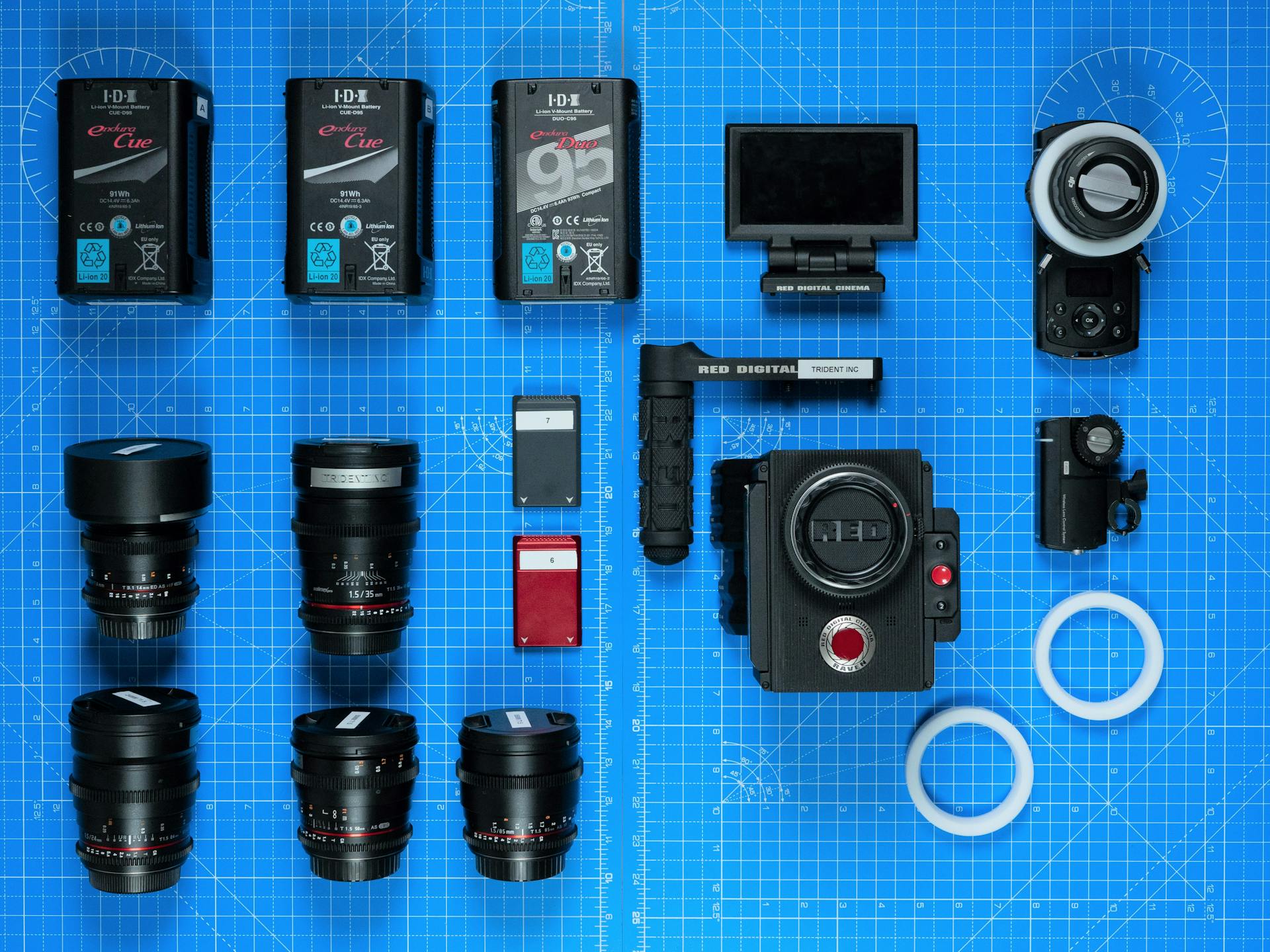
The International Maritime Dangerous Goods (IMDG) Code is the mandatory regulations for the safe transportation of dangerous goods by sea. Amendment 42-24 incorporates updates to address evolving technologies and safety concerns. Special Provision 188 (SP 188) provides conditional exemptions for small lithium cells and batteries, as well as sodium-ion cells and batteries, from some of the IMDG Code’s more stringent requirements, while ensuring robust safety measures.
Lithium metal, lithium-ion, cells and batteries and sodium-ion cells and batteries are always regulated under the IMDG Code 42-24 due to their potential hazards, such as thermal runaway, fire, or explosion.
The relevant provisions are mandatory for the transport of lithium batteries by sea, with no complete exemptions; even small batteries must comply with Special Provision SP 188‘s criteria to qualify for limited relief from full Class 9 dangerous goods classification. This ensures that all shipments prioritize safety in maritime transport, where incidents could have severe consequences for vessels, crews, and the marine environment.
Special Provision SP 188 stipulates that cells and batteries offered for transport are not subject to other provisions of IMDG Code if they meet eight key requirements. For lithium metal cells, the lithium content must not exceed 1 g, while batteries are limited to 2 g aggregate. Lithium-ion and sodium-ion cells are capped at watt-hour rating 20 Wh, with batteries at 100 Wh. All must undergo rigorous testing per sections 2.9.4, including UN Manual of Tests and Criteria (e.g., altitude simulation, thermal tests). Packaging mandates inner enclosures to prevent short circuits, strong outer packagings conforming to IMDG Code section 4.1.1 standards, and a 1.2 m drop test without damage or content release. When installed in equipment, protection from damage and accidental activation is required, excluding intentionally active devices like RFID tags if they pose no heat risk. Marking with the lithium or sodium-ion battery mark (as illustrated in 5.2.1.10 of IMDG Code) is essential, except for minimal quantities.
Special Provision SP 188 balances commercial needs with preventive measures against fire hazards. Compliance not only mitigates risks but also supports sustainable global trade, underscoring the IMDG Code’s role in protecting human life and the environment during sea transport.
| SP 188 | Lithium Metal/Lithium Alloy Cell | Lithium Ion/Sodium-Ion Cell | Lithium Metal/Lithium Alloy Battery | Lithium Ion/Sodium-Ion Battery |
| 188.1 Lithium Content / Watt hour rating for cells | The lithium content is not more than 1 g. | The watt-hour rating is not more than 20 Wh. | N/A (applies to cells) | N/A (applies to cells) |
| 188.2 Aggregate lithium content / Watt hour rating for batteries | N/A (applies to batteries) | N/A (applies to batteries) | The aggregate lithium content is not more than 2 g. | The watt-hour rating is not more than 100 Wh. Lithium-ion and sodium-ion batteries subject to this provision shall be marked with the watt-hour rating on the outside case, except for lithium-ion batteries manufactured before 1 January 2009. |
| 188.3 Manufacturing and Testing | Each lithium cell or battery meets the provisions of 2.9.4.1, 2.9.4.5, 2.9.4.6 if applicable and 2.9.4.7. | Each lithium cell or battery meets the provisions of 2.9.4.1, 2.9.4.5, 2.9.4.6 if applicable and 2.9.4.7. For sodium-ion cells or batteries, the provisions of 2.9.5.1, 2.9.5.5 and 2.9.5.6 shall apply. | Each lithium cell or battery meets the provisions of 2.9.4.1, 2.9.4.5, 2.9.4.6 if applicable and 2.9.4.7. | Each lithium cell or battery meets the provisions of 2.9.4.1, 2.9.4.5, 2.9.4.6 if applicable and 2.9.4.7. For sodium-ion cells or batteries, the provisions of 2.9.5.1, 2.9.5.5 and 2.9.5.6 shall apply. |
| 188.4 Package | Cells and batteries, except when installed in equipment, shall be packed in inner packagings that completely enclose the cell or battery. Cells and batteries shall be protected so as to prevent short circuits. This includes protection against contact with electrically conductive material within the same packaging that could lead to a short circuit. The inner packagings shall be packed in strong outer packagings which conform to the provisions of 4.1.1.1, 4.1.1.2, and 4.1.1.5. | |||
| 188.5 When Installed in Equipment | Cells and batteries when installed in equipment shall be protected from damage and short circuit, and the equipment shall be equipped with an effective means of preventing accidental activation. This requirement does not apply to devices which are intentionally active in transport (radio frequency identification (RFID) transmitters, watches, sensors, etc.) and which are not capable of generating a dangerous evolution of heat. When batteries are installed in equipment, the equipment shall be packed in strong outer packagings constructed of suitable material of adequate strength and design in relation to the packaging’s capacity and its intended use unless the battery is afforded equivalent protection by the equipment in which it is contained. | |||
| 188.6 Package Marking | Each package shall be marked with the appropriate lithium or sodium ion battery mark, as illustrated in 5.2.1.10. Note: Packages containing lithium batteries packed in conformity with the provisions of part 4, chapter 11, packing instructions 965 or 968, Section IB of the ICAO Technical Instructions for the Safe Transport of Dangerous Goods by Air that bear the mark as shown in 5.2.1.10 (lithium battery mark) and the label shown in 5.2.2.2.2, Model No. 9A shall be deemed to meet the provisions of this special provision. This requirement does not apply to: packages containing only button cell batteries installed in equipment (including circuit boards); andpackages containing no more than four cells or two batteries installed in equipment, where there are not more than two packages in the consignment. When packages are placed in an overpack, the lithium battery mark shall either be clearly visible or be reproduced on the outside of the overpack and the overpack shall be marked with the word “OVERPACK”. The lettering of the “OVERPACK” mark shall be at least 12 mm high. | |||
| 188.7 Drop test of package | Except when cells or batteries are installed in equipment, each package shall be capable of withstanding a 1.2 m drop test in any orientation without damage to cells or batteries contained therein, without shifting of the contents so as to allow battery to battery (or cell to cell) contact and without release of contents. | |||
| 188.8 Gross Mass of Packages | Except when cells or batteries are installed in or packed with equipment, packages shall not exceed 30 kg gross mass. Equipment within this special provision means apparatus for which the cells or batteries will provide electrical power for its operation. | |||
2.9.4 Lithium batteries
IMDG Code section 2.9.4 outlines the requirements for cells and batteries, cells and batteries contained in equipment, or cells and batteries packed with equipment, containing lithium in any form. They must be assigned to UN Nos. 3090, 3091, 3480, or 3481 and can only be transported if they meet the following provisions:
2.9.4.1 Testing Requirements: Each cell or battery must be of a type proven to meet the tests in the UN Manual of Tests and Criteria, Part III, subsection 38.3. Cells/batteries meeting older revisions (from revision 3, amendment 1 onward) can continue to be transported, but those only meeting revision 3 (pre-1 July 2003 manufacture) are invalid unless other requirements are met. Batteries must meet these tests regardless of cell composition.
2.9.4.2 Safety Venting/Design: Each cell and battery must include a safety venting device or be designed to prevent violent rupture under normal transport conditions.
2.9.4.3 Short Circuit Prevention: Each cell and battery must have effective means to prevent external short circuits.
2.9.4.4 Reverse Current Protection: Batteries with cells or series of cells in parallel must have effective means (e.g., diodes, fuses) to prevent dangerous reverse current flow.
2.9.4.5 Quality Management Programme: Cells and batteries must be manufactured under a programme including:
.1 Organizational structure and personnel responsibilities for design and quality.
.2 Inspection, test, quality control, assurance, and process instructions.
.3 Process controls to prevent/detect internal short circuits during manufacture.
.4 Quality records (e.g., reports, test data, certificates) available upon request by competed authority.
.5 Management reviews for programme effectiveness.
.6 Document control and revision processes.
.7 Control of non-conforming cells/batteries (not conforming to the type tested as mentioned in 2.9.4.1 above).
.8 Training and qualification for personnel.
.9 Procedures to prevent damage to the final product.
Note: In-house programmes are acceptable without third-party certification, but procedures must be recorded, traceable, and available to authorities.
2.9.4.6 Hybrid Lithium Batteries: Batteries with both primary lithium metal cells and rechargeable lithium ion cells (not externally chargeable, see special provision SP 387) must ensure: ion cells charge only from metal cells; overcharge is prevented by design; the battery is tested as a primary lithium type; and component cells meet Manual of Tests and Criteria, part III, subsection 38.3 requirements.
2.9.4.7 Test Summary Availability: Manufacturers and distributors of cells/batteries (manufactured after 30 June 2003, except button cells in equipment) must make the test summary (per Manual of Tests and Criteria, 38.3.5) available for compliance verification by consignors or supply chain parties.
2.9.5 Sodium Ion Batteries
This newly added section outlines the classification and transport requirements for sodium ion batteries, which are rechargeable electrochemical systems featuring intercalation or insertion compounds in both electrodes, no metallic sodium (or sodium alloy) in either electrode, and an organic non-aqueous electrolyte. Intercalated sodium exists in ionic or quasi-atomic form within the electrode lattice. They shall be assigned to UN Nos. 3551 or 3552, as appropriate.
2.9.5.1 Testing: Each cell or battery must be of a type proven to meet the applicable tests in the UN Manual of Tests and Criteria, Part III, subsection 38.3.
2.9.5.2 Safety Design: Incorporate a safety venting device or be designed to prevent violent rupture under normal transport conditions.
2.9.5.3 Short Circuit Prevention: Equipped with effective means to prevent external short circuits.
2.9.5.4 Reverse Current Protection: Batteries with cells or series of cells connected in parallel must include necessary measures (e.g., diodes, fuses) to prevent dangerous reverse current flow.
2.9.5.5 Quality Management: Manufactured under a quality management program as specified in sections 2.9.4.5.1 to 2.9.4.5.9.
2.9.5.6 Test Summary Availability:: Manufacturers and subsequent distributors must provide the test summary as detailed in the UN Manual of Tests and Criteria, Part III, subsection 38.3, paragraph 38.3.5.
- Further reading: Test Summary | CINS Guidelines for Shipping Lithium-ion Cells in Containers
Discover more from IMDG Code Compliance Centre
Subscribe to get the latest posts sent to your email.

[…] Click here for the latest update on special provision 188 under IMDG Code 42-24 here […]
Thanks for your kind information.