


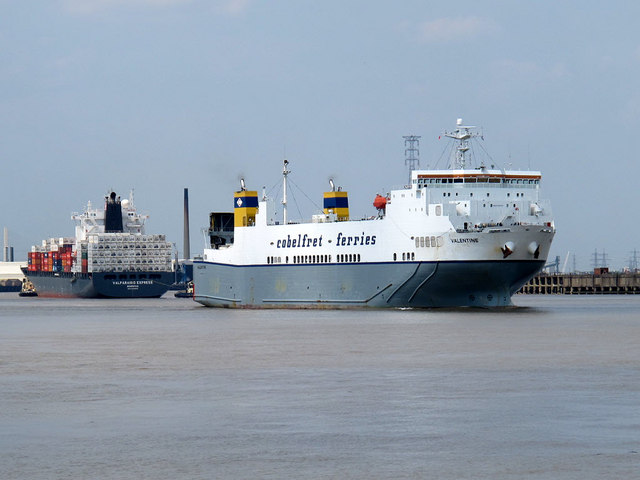
- EV fires on ro-ro vessels are not more frequent than ICEV fires, but lithium-ion battery fire risks require special handling.
- The current guidelines are voluntary, mandatory IMO rules are expected by 2027.
- The best critical safety measures are early detection, drencher systems, and crew training.
Background
Lithium-ion battery-powered vehicles are increasingly transported on roll-on/roll-off (ro-ro) vessels, including ro-ro passenger (RoPax) and pure car and truck carriers (PCTCs). These vehicles pose unique fire hazards due to the risk of thermal runaway, which can lead to intense, hard-to-extinguish fires. Currently, there are no mandatory international regulations specifically for EVs, but several organizations have issued guidelines to address these risks.
Current Guidelines
Main recommendations are early fire detection using thermal imaging and AI systems, installing drencher systems for firefighting, and doubling CO2 capacity for PCTCs. Crews should receive specialized training on EV fire risks, and EVs should be stowed in designated areas away from critical zones. The International Maritime Organization (IMO) is working on mandatory rules, with a target completion date of 2027, but current guidelines from European Maritime Safety Agency (EMSA), UK Maritime and Coastguard Agency (MCA), and International Union of Marine Insurance (IUMI) are widely adopted.
What is in the future?
While EV fires are statistically similar to ICEV fires in frequency and danger, their unique characteristics necessitate proactive measures. Shipowners should follow existing guidelines and stay updated on IMO’s regulations for enhanced safety.
Guidelines for Transporting Lithium-Ion Battery Vehicles on Ro-Ro Ships Due to Fire Risks
The carriage of lithium-ion battery-powered vehicles, primarily electric vehicles (EVs), on roll-on/roll-off (ro-ro) vessels, including ro-ro passenger (RoPax) and pure car and truck carriers (PCTCs), has become a significant concern due to the fire hazards associated with lithium-ion batteries. Currently, the maritime industry lacks mandatory international regulations specifically tailored for carriage of EVs, but several organizations have developed comprehensive guidelines to mitigate these risks.
This guideline provides a detailed overview of the latest recommendations, drawing from recent publications by the International Maritime Organization (IMO), European Maritime Safety Agency (EMSA), UK Maritime and Coastguard Agency (MCA), ClassNK, International Union of Marine Insurance (IUMI) and other relevant bodies.
Background and Fire Hazards
Lithium-ion batteries, commonly used in EVs, pose unique fire risks due to the potential for thermal runaway which can lead to fires or explosions. These fires are characterized by their intensity, difficulty in extinguishing, and the production of toxic gases such as hydrogen fluoride. Research, including findings from the EU’s LASHFIRE project, indicates that while EV fires are not statistically more frequent or dangerous than internal combustion engine vehicle (ICEV) fires, their special characteristics, such as encapsulation and under-vehicle positioning, require distinct safety measures. For instance, EV fires can reach peak intensity within 2–3 minutes and may require up to 10,000 liters or more of water for suppression, compared to 4,000 liters for ICEV fires.
The increase in EV maritime transport, driven by global registration growth (exponential since 2011, as per the International Energy Agency’s Global EV Outlook 2022), has heightened the need for robust safety protocols. Ro-ro vessels, designed for wheeled cargo, are particularly vulnerable due to their open deck layouts and lack of internal bulkheads, which can facilitate rapid fire spread.
What are the current Regulatory Frameworks?
As of now, there are no mandatory IMO regulations specifically for EVs on ro-ro vessels. The current framework, including SOLAS Chapter II-2, predates the commercial viability of EVs and does not fully address their fire risks. However, the IMO has been actively addressing this gap:
- The IMO Interim Guidelines provide recommendatory guidance, primarily for RoPax vessels, with general EV advice.
The company should establish a fire-fighting plan that, in particular, identifies any risks specific to alternatively powered vehicles, including battery powered vehicles, and outlines the most appropriate fire-fighting techniques for such vehicles. The company should ensure adequate training and good access to any specialized fire-fighting equipment for alternatively powered vehicles. [IMO MSC.1/Circ.1615]
Guidance from National and regional bodies:
- The EMSA Guidance on the Carriage of AFVs in Ro-Ro Spaces covers RoPax and RoRo/PCTC focusing on stability, loading, ignition protection, detection, and suppression.
- The UK MCA’s MGN 653 (Amendment 1) supplements IMO guidelines, providing a framework for safe EV carriage, including charging operations, and advises risk assessments.
- The International Chamber of Shipping (ICS) has issued Common Guidance with a checklist for vehicle shipment risks, including EVs, for RoRo and PCTC vessels.
Industry Best Practices and Recommendations
Several organizations have developed detailed best practices to address EV fire hazards, which shipowners and operators are encouraged to adopt proactively:
- ClassNK Guidelines: ClassNK’s Guidelines for the Safe Transportation of Electric Vehicles provide background on EV fire characteristics and measures for prevention and response. These voluntary guidelines include information on lithium-ion battery specifications and offer a verification service for shipowners, with a notation for compliance. ClassNK also issued Technical Enquiry Circular (TEC) No. 1239, addressing fire damage reduction on vehicle carriers using fixed foam systems.
- IUMI Best Practices: The International Union of Marine Insurance (IUMI) released recommendations in 2023, emphasizing early fire detection and verification to reduce response time. They advocate for drencher systems on ro-ro and ropax vessels, alongside video monitoring, and suggest doubling CO2 extinguishing system capacity for PCTCs. Research cited by IUMI indicates that 80% of vehicle fires are fueled by the car body and interior, not the propulsion system, highlighting the need for effective suppression systems.
- Maritime Mutual Recommendations: Maritime Mutual’s Risk Bulletin No. 51 recommends adopting IMO MSC.1/1615, EMSA Guidance, MCA MGN 653, and ICS Guidance as industry best practices. It notes that EV fires, while rare, require pre-planning due to their encapsulation and potential for toxic gas emissions.
Detailed Fire Prevention and Mitigation Measures
To address the specific fire hazards of lithium-ion battery-powered vehicles, the following measures are recommended:
- Fire Prevention:
- Screen and inspect vehicles, especially used or second-hand EVs, for hidden damage, as damaged batteries pose a higher risk of thermal runaway. Factory-new EVs have no documented cases of causing fires on board.
- Maintain batteries at an optimal state of charge (SOC), ideally 30–50%, to reduce fire risk. Lower charge levels decrease the likelihood of thermal runaway.
- Prohibit onboard charging on PCTCs due to the lack of infrastructure and increased risk. For ropax vessels, charging may be allowed if a comprehensive risk assessment is conducted and safety measures are implemented.
- Stow EVs in designated areas with easy crew access, away from machinery spaces, dangerous goods, passenger egress routes, and muster points. Consider EV weight (approximately 25% heavier than ICEVs) for vessel stability and ensure proper securing to prevent shifting, which could damage batteries.
- Fire Detection:
- Install early detection systems, including thermal imaging cameras, gas detectors, heat and smoke detectors, and AI-powered CCTV systems, to identify fires at the onset. Thermal runaway can begin at battery temperatures as low as 60–70°C.
- Conduct regular safety rounds using handheld thermal imaging cameras to monitor vehicle decks and minimize detection-to-response time.
- Firefighting and Suppression:
- Use drencher systems on ro-ro and ropax vessels, effective for both EV and ICEV fires, installed with video monitoring to control fire spread and manage water drainage for stability.
- For PCTCs, double CO2 system capacity, as it is effective if applied quickly, though it does not remove heat or flammable gases, increasing re-ignition risks.
- Consider high-expansion foam systems, as researched by Japan and submitted to the IMO (SSE 9/INF.4), for their effectiveness in preventing heat transfer and extinguishing lithium-ion battery fires.
- Equip crews with specialized gear, such as fire blankets or textile boundaries, to contain flames until sufficient water is available, and full-face respirators to handle toxic vapors like hydrogen fluoride.
- Post-fire monitoring is critical, as EV fires can reignite days or weeks later, requiring continuous monitoring and removal of affected vehicles from the ship as soon as possible.
- Crew Training and Emergency Preparedness:
- Provide specialized training on EV-specific fire risks, including thermal runaway, toxic gas hazards, and the use of specialized firefighting equipment. Current STCW requirements do not adequately address EV fires, so additional training is essential.
- Develop vessel-specific emergency response plans, including coordination with shore-based fire and rescue services, factoring in response times. For ropax vessels, maneuver to direct toxic vapors away from passenger areas and ensure BEVs are stowed away from egress routes and muster points.
Vessel Design and Insurance Considerations
Current vessel designs are not suited for lithium-ion battery fires, which need different firefighting methods than conventional fires. Open decks on ro-ro vessels complicate firefighting due to airflow, while PCTCs’ tightly packed decks limit access and facilitate fire spread. . Should naval architects rethink designs to enhance safety, potentially incorporating advanced detection and suppression systems?
Marine insurers emphasize that EV fires are not more frequent or energetic than ICEV fires but are harder to extinguish due to thermal runaway. Insurers advocate for enhanced safety systems and may increase costs for vessels carrying EVs, highlighting the need for risk management strategies.
Recent Incidents and Industry Response
Recent incidents, such as the Fremantle Highway fire in July 2023 and the Felicity Ace fire in 2022, have underscored the need for improved safety measures, though no fire has been definitively linked to a factory-new EV. These events have prompted increased focus on guidelines such as those of ClassNK and ongoing IMO discussions aiming for regulations by 2027.
Conclusion
As of now, the maritime industry relies on voluntary guidelines from EMSA, MCA, ClassNK, IUMI, and others to manage the fire hazards of lithium-ion battery-powered vehicles on ro-ro vessels. These guidelines emphasize early detection, advanced firefighting systems, crew training, and strategic stowage. Considering IMO’s mandatory regulations may come by 2027, shipowners and operators should proactively adopt these best practices to ensure safety, particularly given the increasing volume of EV transport and the unique challenges posed by lithium-ion battery fires.
List of guidelines
| Organization | Guideline/Document | Key Focus Areas | Applicability |
| IMO | MSC.1/1615 (2019) Interim Guidelines | General EV guidance, under review, target 2027 completion | RoPax, recommendatory |
| EMSA | Guidance on Carriage of AFVs in Ro-Ro Spaces | Stability, loading, detection, suppression | RoPax, RoRo, PCTC |
| UK MCA | MGN 653 (Amendment 1) | Safe EV carriage, charging, risk assessments | RoPax, RoRo |
| ICS | Common Guidance | Checklist for vehicle risks, including EVs | RoRo, PCTC |
| ClassNK | Guidelines for Safe Transportation of EVs | EV fire characteristics, prevention, response | All ro-ro vessels, voluntary |
| IUMI | Best Practices for EV Carriage | Early detection, drencher systems, CO2 capacity doubling | Ro-ro, ropax, PCTC |
Discover more from IMDG Code Compliance Centre
Subscribe to get the latest posts sent to your email.