


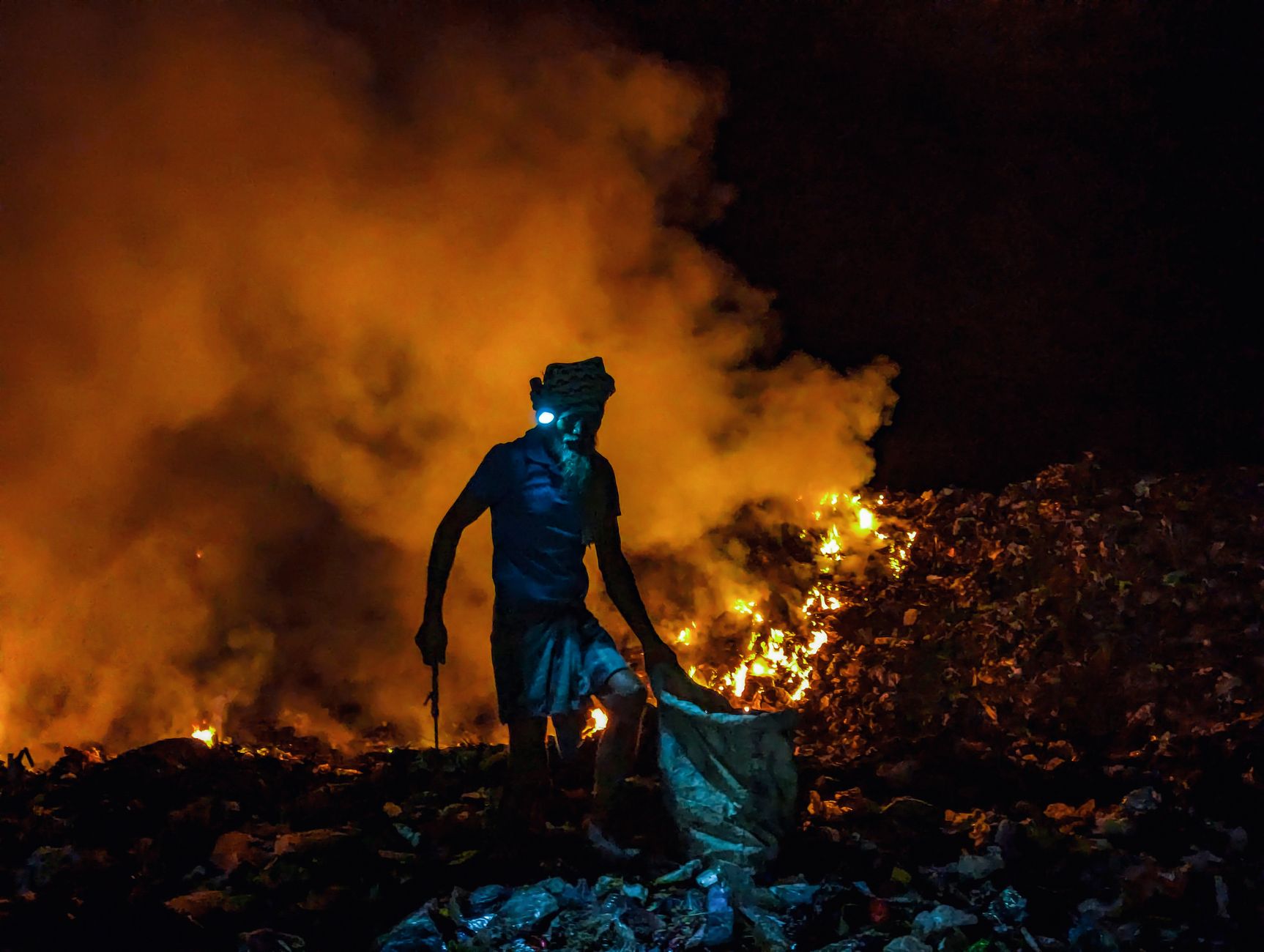
- Explosion: 2:47 a.m., August 22, 2026, Annan District, Tainan, Taiwan
- 15 injured (3 firefighters, 12 residents), all discharged; 68 homes damaged
- Site: vacant lot storing aluminium-magnesium alloy waste, aluminium materials, used industrial oil
- Case referred to prosecutors on suspicion of illegal waste dumping
- Cause of the explosion: not officially confirmed. This article examines a plausible water-reactive metal mechanism — see analysis below.
A fire on an empty lot in Tainan’s Annan District turned into an explosion strong enough to injure 15 people and damage dozens of homes early on August 22. The Tainan City Fire Bureau took the first call at 1:12 a.m. for a waste pile alight on Haidian Road Section 2. By the time 144 firefighters and 53 vehicles had the blaze underway, the site detonated — at 2:47 a.m., mid-operation, while crews were still applying water and foam.
Three firefighters and twelve residents were hurt, mostly cuts and minor burns, and all were later discharged from hospital. Sixty-eight homes reported damage, with the three closest to the blast site worst affected. Eleven privately owned vehicles were damaged along with eight fire engines, an ambulance and two disaster-assessment vehicles. Air quality readings taken afterward came back normal.
The lot was not an operating factory. It was vacant land in a residential neighbourhood, and the Fire Bureau’s preliminary finding was that it had been used to store aluminium-magnesium alloy waste, aluminium materials and used industrial oil. Police and environmental officials are now investigating the landowner, whoever was using the site, and any intermediaries connected to the material. A company registered in Kaohsiung with a metal-related business has been identified in the inquiry, though authorities have not named it as responsible. The case has gone to prosecutors on suspicion the waste was dumped there illegally.
What actually blew up
The sequence — fire first, explosion roughly ninety minutes later, during active firefighting — is consistent with a well-documented hazard, though the reporting so far doesn’t confirm it. None of the accounts describe the physical form of the aluminium-magnesium waste on site: whether it was solid stock and off-cuts, or fines, turnings, swarf and dross. That distinction is the entire hazard. Solid alloy in block, sheet or ingot form has little surface area exposed to water and reacts, if at all, too slowly to matter. Fines, turnings and dross are a different material: the surface area is high enough for the alloy to react with water fast, liberating hydrogen in quantity, and depending on composition and any residual process chemicals, the same reaction can throw off acetylene, ammonia, phosphine and methane alongside it. Hydrogen ignites at very low concentrations. If the Tainan pile included material in this fine or turned form, pouring firefighting water onto a heated stockpile wouldn’t have extinguished it — it would have generated the explosive atmosphere that finished the job. Investigators will need to establish the physical form of the waste before that mechanism moves from plausible to confirmed.
This is not a hypothetical hazard class. The IMDG Code carries a dedicated entry for it: UN 3170, Aluminium Smelting By-Products or Aluminium Remelting By-Products, Class 4.3, Packing Group II or III, precisely because dross, skimmings, salt slag and spent potlining from aluminium production are known to do exactly what happened in Tainan. Where the material doesn’t fit that specific process-residue description — mixed alloy turnings or swarf, for instance — it would still need to be tested against the UN Manual of Tests and Criteria for water-reactivity, and would typically fall to a generic Class 4.3 entry such as UN 3208 (metal powder, self-heating, n.o.s.) or UN 3209 (metal powder, water-reactive, n.o.s.) if it meets the criteria. Either way, the governing hazard class doesn’t change: this is water-reactive material, and firefighters extinguishing a fire with water are, unknowingly, running the same reaction a shipper is required to prevent in a sealed container at sea.
The gap between a vacant lot and a bill of lading
None of this waste was cargo when it exploded — it was sitting on land, outside any transport regime. But the same reactivity is exactly what the IMDG Code exists to control the moment such material is packed for onward movement, whether that’s a domestic run to a recycler or an export shipment. A consignor moving aluminium-magnesium scrap or smelting residue by sea has to classify it under Class 4.3, choose packaging that keeps it dry and segregated from incompatible cargo, and declare it accordingly. A vacant lot in a residential district skips all of that, which is the entire reason 15 people ended up in hospital.
Whether this waste was headed for export raises a separate question. Taiwan is not a Party to the Basel Convention — its exclusion from UN membership rules that out — but it runs a domestic regime built along the same lines. Under Article 38 of Taiwan’s Waste Disposal Act, hazardous industrial waste can only leave the country to OECD member states or to countries with a bilateral transboundary-movement agreement, and only after a permit is granted. If the material implicated in this fire was ever intended for cross-border movement — recovery in China, for instance, or sale as recycled feedstock elsewhere — that permit requirement would apply on top of, not instead of, IMDG classification for the sea leg. So far, investigators have described this as a domestic illegal-dumping case, with no import or export dimension confirmed. That could change as the inquiry into the Kaohsiung-registered company progresses.
Why this matters more at sea than on a lot
On land, a water-reactive waste fire is dangerous but survivable — a fire brigade can withdraw, reassess and switch extinguishing agents once the risk becomes apparent, which is roughly what Tainan’s crews were forced into only after the explosion. A ship gives a crew none of that margin. If the same kind of aluminium-magnesium waste were loaded as cargo, declared or not, and caught fire in a hold or on deck, the default response is the fire main. Water is the extinguishing medium a crew reaches for automatically, and it is exactly the wrong response to a Class 4.3 cargo. Applying it below decks doesn’t just risk repeating Tainan — it does so inside a steel enclosure, with the crew standing next to it, days from the nearest port and outside any shore-based emergency response.
This is why the IMDG Code assigns water-reactive cargo its own emergency response schedules, which specifically restrict or prohibit water on the substance itself and direct crews toward dry agents instead. None of that protects anyone if the cargo was never correctly classified and declared to begin with — a crew fighting an undeclared or misdeclared fire has no way of knowing they’re looking at Class 4.3 material until the explosion tells them. Correct classification and declaration isn’t paperwork sitting next to the safety case for cargo like this; it is the safety case. Get the UN number and class wrong, or leave the material off the manifest, and the firefighting response a crew reaches for by instinct becomes the mechanism of the casualty — which is the exact reasoning behind IMDG’s insistence on shipper-level classification rather than leaving it to be worked out after the fire starts.
None of this makes Tainan a maritime case, and it isn’t one — a vacant lot isn’t a transport regime, and no IMDG obligation attaches to waste sitting on land. What doesn’t change with location is the chemistry: a water-reactive metal pile is exactly as dangerous to a fire crew hosing it down on a residential street as it is to a crew doing the same thing in a ship’s hold. That’s why the IMDG Code treats correct classification and declaration as the thing standing between a fire and a fatality, not paperwork attached to one after the fact. For anyone storing or moving aluminium-magnesium waste domestically, the lesson is to stop treating it as inert scrap the moment the standard fire response is water. For anyone shipping it, the lesson is that Class 4.3 classification and Basel-equivalent export controls aren’t formalities to clear before the cargo moves — they’re the only thing that tells a crew at sea not to reach for the fire main.
Related reading: Aluminium Smelting By-Products — UN 3170 (shashikallada.com)
Sources
- Taipei Times — “Tainan fire injures 15 and damages 68 homes” (Aug 23, 2026)
- Focus Taiwan / CNA — “Fire explosion in Tainan injures 13, damages homes, vehicles” (Aug 22, 2026)
- APA — “Fire, explosion in Taiwan injure 15, damage 68 homes”
- Kaohsiung Times — “Tainan blast: What we know about the hazardous-waste fire that injured 14”
- TaiwanPlus — “Tainan Explosion and Blaze Leave at Least 13 Injured, 11 Houses Damaged”
- ICRT News — “Fire, explosion in Tainan injure 13; homes, vehicles damaged”
Regulatory references
Discover more from IMDG Code Compliance Centre
Subscribe to get the latest posts sent to your email.