


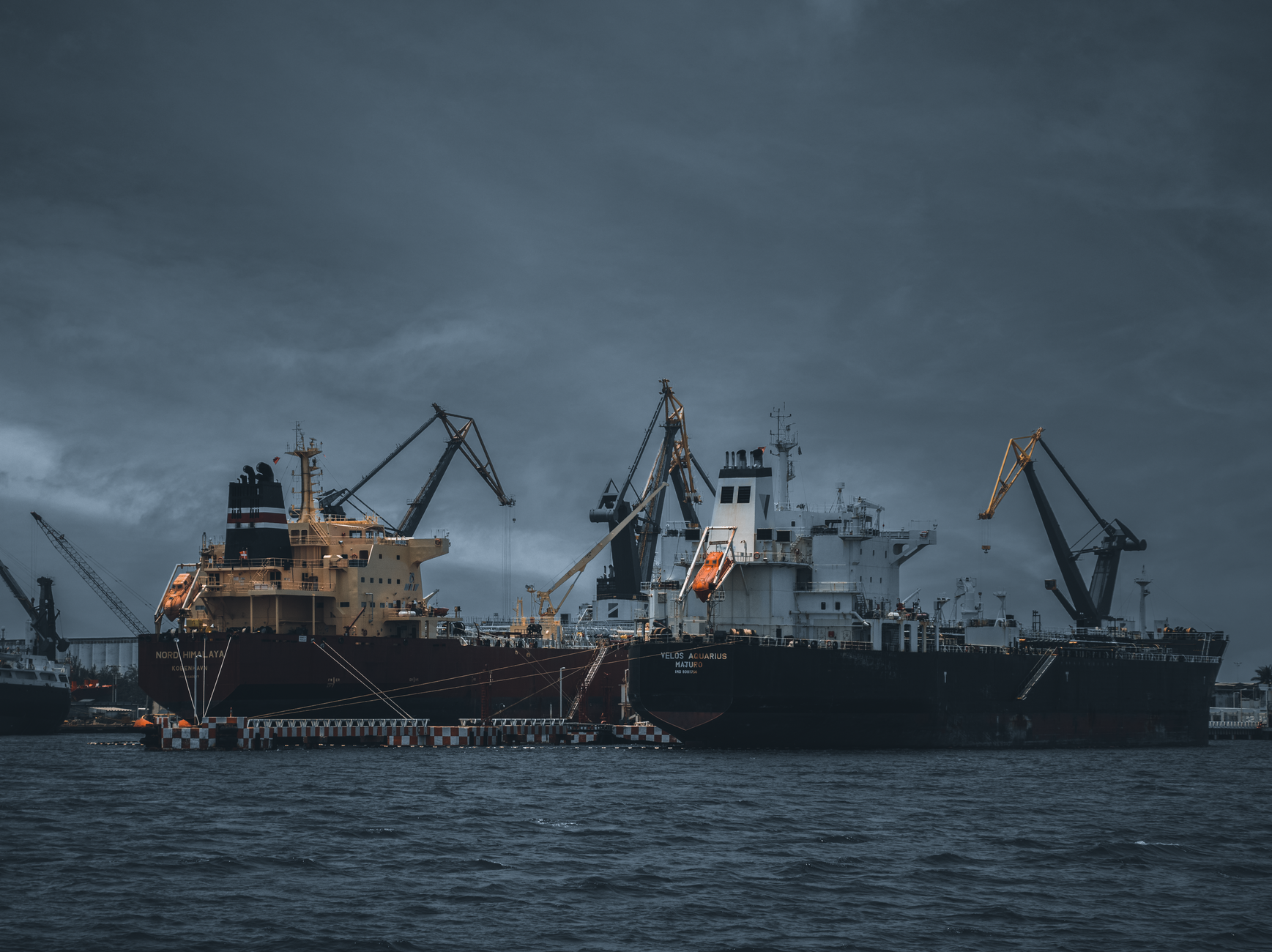
A Comprehensive Analysis of Maritime Safety Frameworks and Cross-Modal Harmonization
Over a century ago, the global chemical logistics landscape operated under dangerous uncertainty. Ships set sail with volatile, poorly understood cargoes, relying on localized port guidelines, fragmented merchant shipping rules, or the sheer luck of the crew. When Dr. Julius Abby of Antwerp stood before the Eighth International Congress of Applied Chemistry in 1912, he brought forward a critical warning: multi-language confusion, a complete lack of standardized classifications, and an alarming rate of accidents involving everyday industrial materials such as bleaching powder, metallic sodium, and arsenic acid.
What Dr. Abby and other early safety-minded chemists of his era recognized was that hazardous cargo does not respect geopolitical borders. Real safety required a unified, global regulatory framework. Today, international maritime transport is governed by a sophisticated network of mandatory codes derived directly from the International Convention for the Safety of Life at Sea (SOLAS) and the International Convention for the Prevention of Pollution from Ships (MARPOL). The multi-decade transition from early 20th-century uncertainty to today’s mandatory global standards reflects a relentless industry pursuit of safety at sea.


1. The Constitutional Foundation: SOLAS and Chapter VII
The historical catalyst for modern maritime safety frameworks was the sinking of the RMS Titanic in 1912, which prompted the convening of the first SOLAS convention in 1914. While early iterations focused almost exclusively on ship construction, life-saving appliances, and radio telegraphy, the 1929 SOLAS Conference formally recognized that the unregulated carriage of dangerous goods posed a direct threat to human life and vessel integrity.
By the 1948 SOLAS Conference, member nations moved beyond merely acknowledging the risk. They adopted a structured classification system for dangerous goods and drafted general provisions for their packing, marking, and stowage. This milestone laid the structural groundwork for what would eventually become Chapter VII of SOLAS (Carriage of Dangerous Goods), which remains the constitutional backbone of all international maritime hazardous material regulations to this day.
2. The Cross-Modal Catalyst: The Berlin Airlift and IATA Frameworks
While the maritime industry was gradually formalizing its rules, a major geopolitical crisis on land was reshaping dangerous goods transport in a different mode entirely. The Berlin Blockade (1948–1949) saw the Soviet Union sever all rail, road, and water supply routes into Allied-controlled West Berlin. In response, the Western Allies mounted the Berlin Airlift: a sustained around-the-clock airlift that kept the city supplied by air alone for almost a year, at its peak landing a transport aircraft roughly every 90 seconds.
Sustaining over two million civilians required flying in not just food and coal, but genuinely hazardous cargo — bulk coal dust, aviation and heating fuel, and industrial chemicals — under extreme operational tempo. Unpressurized fuselages, rapid temperature and altitude changes, and high-vibration aircraft floors exposed the fact that packaging designed for ground or sea transport was not necessarily adequate for the very different stresses of air carriage.
The operational experience gained during the Airlift is widely understood to have fed into the aviation industry’s growing recognition, in the early 1950s, that “restricted articles” needed dedicated global standards distinct from maritime and rail practice. This broader post-war push led the International Air Transport Association (IATA) to develop the world’s first unified aviation dangerous goods framework — the IATA Restricted Articles Regulations (RAR) — which entered into force in 1956. The Airlift is best understood as one of several contributing pressures on this development, alongside the general post-war boom in air cargo, rather than its sole or direct cause. The same period saw growing recognition, at United Nations level, of the need for cross-modal harmonization — a process that would eventually tie aviation rules (IATA), land rules (ADR/RID), and maritime rules (the IMDG Code) to the same foundational class system used today.


3. The IMDG Code: The Cornerstone of Packaged Hazardous Cargo
As the global chemical industry expanded after World War II, the United Nations established the UN Committee of Experts on the Transport of Dangerous Goods. This body created the “UN Model Regulations” (commonly known as the Orange Book), establishing a harmonized 9-class system, unique 4-digit UN identification numbers, and standardized packing criteria across all transport modes. In direct alignment with this work, the Inter-Governmental Maritime Consultative Organization (IMCO, now the International Maritime Organization, or IMO) drafted the International Maritime Dangerous Goods (IMDG) Code, first adopted in 1965.
For nearly four decades, the IMDG Code operated primarily as a respected recommendation. While many major maritime nations adopted its provisions into their domestic legislation, its status as a voluntary code left gaps in global compliance. This changed fundamentally on 1 January 2004, when amendments to SOLAS Chapter VII entered into force, rendering the IMDG Code mandatory worldwide for all contracting governments.
The Code’s scope extends beyond life-safety hazards alone. Substances identified as harmful to the marine environment carry the additional “MARINE POLLUTANT” marking under the Code’s Chapter 2.10 criteria, giving effect to MARPOL Annex III (Prevention of Pollution by Harmful Substances Carried by Sea in Packaged Form). A substance can therefore be regulated under the IMDG Code either because it is a dangerous good in its own right, because it is identified as a marine pollutant, or both.


The Structural Overhaul: The Shift from Five Volumes to Two
Prior to the turn of the century, the IMDG Code was a fragmented, encyclopedic document structured across five distinct binder volumes. Each hazard class was separated into its own volume, making cross-checking and intermodal compliance cumbersome for logistics personnel, ship crews, and port operators. A significant turning point came with Amendment 30-00, adopted in 2000.
Amendment 30-00 reformatted the IMDG Code, compressing it from five volumes into two, complemented by a standalone Supplement containing the EmS Guide and the Medical First Aid Guide (MFAG). This was not a cosmetic change; it aligned the maritime format directly with the structure of the UN Model Regulations. Volume 1 was organized to house Parts 1, 2, 4, 5, 6, and 7 (general provisions, classification, packing, consignment procedures and stowage), while Volume 2 was dedicated entirely to Part 3 — the Dangerous Goods List (DGL) and its associated limited quantities exceptions. This restructuring simplified everyday lookup work and helped pave the way for the Code’s transition into a mandatory international standard.
The Evolution of Tech Cargo: The Case of Lithium Batteries
The IMDG Code is updated biennially to reflect shifting industrial risks, new commercial chemical formulations, and technological change. A good example of this adaptability is the regulation of lithium batteries. Lithium batteries entered the IMDG Code in the late 1980s to early 1990s, as the technology moved from laboratory curiosity into consumer and industrial products. By the 27th Amendment of the IMDG Code, published in 1994, the Code already carried dedicated Class 9 entries for UN 3090 and UN 3091 (lithium metal batteries), establishing early sea transport requirements for cell testing, short-circuit prevention, and maximum lithium content per package.
As commercial technology shifted heavily toward lithium-ion chemistry, the regulatory structure underwent a major overhaul under Amendment 34-08 (adopted in 2008, mandatory from 1 January 2010). This amendment aligned the Code with the UN Model Regulations and split the cargo into the distinct categories still used today:
- UN 3480 & UN 3481: created specifically for rechargeable Lithium-Ion Batteries, switching the regulatory threshold from lithium content to Watt-hours (Wh).
- UN 3090 & UN 3091: retained for primary, non-rechargeable Lithium Metal Batteries, continuing to use total lithium content in grams as the defining threshold.
This trajectory continues into the current era. Amendment 42-24 introduces standalone entries for newer battery technologies, including Sodium-Ion Batteries (UN 3551 and UN 3552) and specific battery-powered vehicles (UN 3556, UN 3557, and UN 3558), extending the same classification logic developed for lithium batteries to the next generation of energy storage cargo.


4. Beyond Packages: Bulk Liquid Chemicals and Liquefied Gases
As industrial manufacturing scaled globally, transporting hazardous materials solely in packages or drums became uneconomical for large industrial quantities. The maritime sector responded by engineering specialized tank vessels to move liquid and gaseous cargo in bulk. This shift demanded dedicated safety codes built into the fabric of both SOLAS and MARPOL.
The IBC Code (International Bulk Chemical Code)
During the late 1960s and 1970s, the maritime transport of liquid chemicals in bulk grew rapidly. To manage the risks of fire, toxic vapour release, and marine pollution, IMO developed the Code for the Construction and Equipment of Ships Carrying Dangerous Chemicals in Bulk (BCH Code), which evolved into the International Bulk Chemical Code (IBC Code). The IBC Code became mandatory under both SOLAS Chapter VII and MARPOL Annex II for chemical tankers built on or after 1 July 1986.
The IBC Code sets the structural design, survivability, and tank arrangement requirements for chemical tankers, and assigns each product listed in its Chapter 17 to one of three ship types (Type 1, 2, or 3) according to the severity of its hazard. Type 1 ships — offering the maximum degree of containment and survivability — are reserved for the small number of products in Chapter 17 assessed as presenting the most severe combined safety and pollution hazard; Type 2 and Type 3 apply to products of progressively lesser hazard. Because the specific Type 1 assignment for any individual product can change between IBC Code amendments, readers needing a current, product-specific ship type should always confirm it against the latest Chapter 17 table rather than a fixed list of named chemicals.


The IGC Code (International Gas Carrier Code)
Parallel to bulk liquid chemicals, the maritime sector developed dedicated rules for transporting liquefied gases — such as Liquefied Natural Gas (LNG) and Liquefied Petroleum Gas (LPG) — carried at cryogenic temperatures or high pressures. The International Code for the Construction and Equipment of Ships Carrying Liquefied Gases in Bulk (IGC Code) was made mandatory under SOLAS Chapter VII in 1986, alongside the IBC Code. It sets strict parameters for thermal insulation, cargo containment metallurgy, and gas detection systems to guard against hull embrittlement and explosion.


5. Solid Bulk Cargoes: The IMSBC Code
Dangerous goods do not only travel in liquid tanks or packaged freight. Millions of tons of minerals, ores, and coal cross the oceans daily as solid bulk cargo. Historically regulated by the non-mandatory Code of Safe Practice for Solid Bulk Cargoes (BC Code), a series of vessel losses caused by cargo shifting and moisture-induced liquefaction forced a regulatory overhaul. In 2008, IMO adopted the International Maritime Solid Bulk Cargoes (IMSBC) Code by resolution MSC.268(85), which entered into force and became mandatory under SOLAS Chapter VI on 1 January 2011.
The IMSBC Code classifies solid bulk materials into three categories based on their behavioural risk during a voyage:
- Group A: cargoes that may liquefy if shipped at a moisture content exceeding their Transportable Moisture Limit (TML). Examples include nickel ore and bauxite fines. Liquefaction causes the cargo to behave like a fluid, resulting in a sudden loss of ship stability.
- Group B: cargoes possessing chemical hazards that can create dangerous situations on board — for example, coal emitting flammable methane, or direct reduced iron (DRI) reacting with moisture to generate hydrogen gas.
- Group C: cargoes that are neither liable to liquefy nor chemically hazardous, but still require careful stowage, trimming, and stability management during the voyage.


Summary Framework Matrix
| Code / Instrument | Cargo Type | Mandatory Since | Parent Instrument |
|---|---|---|---|
| IMDG Code | Packaged dangerous goods & packaged marine pollutants | 1 January 2004 | SOLAS Chapter VII / MARPOL Annex III |
| IBC Code | Bulk liquid chemicals | 1 July 1986 | SOLAS Chapter VII / MARPOL Annex II |
| IGC Code | Bulk liquefied gases | 1986 | SOLAS Chapter VII |
| IMSBC Code | Solid bulk cargoes (incl. dangerous goods in solid form in bulk) | 1 January 2011 | SOLAS Chapter VI (Parts A & B) / Chapter VII (Part A-1) |
Conclusion: Bridging History to the Present Day
When comparing the fragmented, isolated shipping world of 1912 to today’s maritime landscape, the progress achieved by the international maritime community is considerable. The industry has replaced ad-hoc, localized rules with structured, globally recognized, mandatory frameworks.
The evolution of dangerous goods regulations remains a dynamic, ongoing process. As global trade encounters new challenges — the scaling-up of alternative fuels like ammonia and hydrogen, and the rapidly evolving logistics of electric vehicle and battery transport — the foundational pillars of SOLAS, the IMDG Code, and its sister bulk codes will continue to adapt. The core mission, however, remains unchanged since the era of Dr. Abby: protecting the lives of crews, safeguarding the structural integrity of vessels, and preserving the marine environment.
Historical & Regulatory References
- SOLAS Convention (Chapters VI & VII), International Maritime Organization.
- MARPOL Convention (Annex II/III), International Maritime Organization.
- IMDG Code, 27th Amendment (1994) and Amendments 30-00, 34-08, and 42-24.
- IBC Code, International Maritime Organization (Resolution MSC.4(48) and subsequent amendments).
- IMSBC Code, Resolution MSC.268(85), adopted 4 December 2008.
- IATA Restricted Articles Regulations, first edition, 1956.
- Historical Document: Dr. Julius Abby, “The Transportation of Dangerous Goods by Water,” Eighth International Congress of Applied Chemistry (1912).
- Source Article Context: shashikallada.com — History of Dangerous Goods Regulations
Discover more from IMDG Code Compliance Centre
Subscribe to get the latest posts sent to your email.