


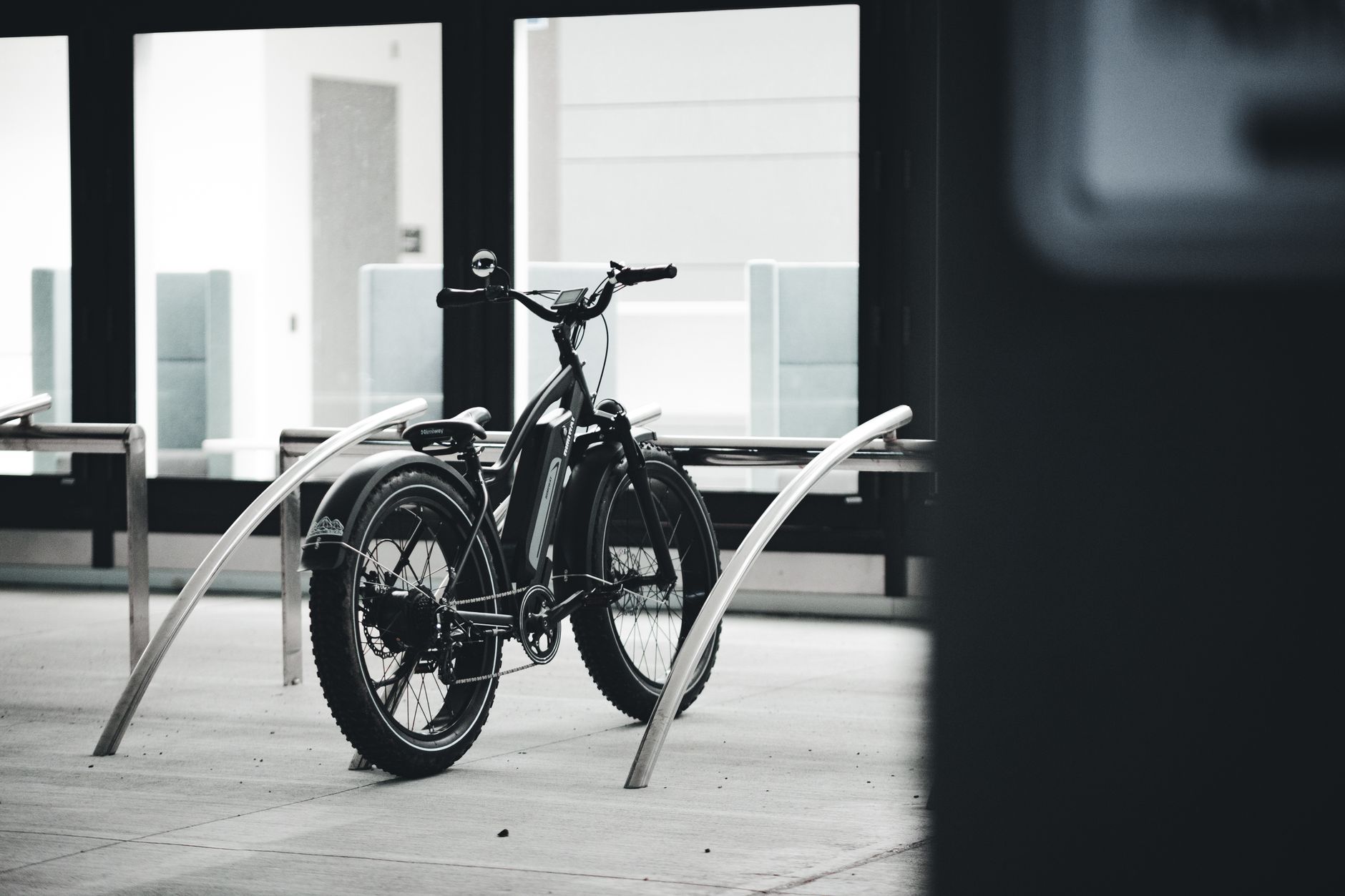
A folding e-scooter charging in a bedroom. A packed London Underground train. A bulk carrier’s cargo hold in the North Pacific. A car carrier burning for three weeks in the middle of the ocean. Each has been the starting point of a lithium-ion battery fire that went from a wisp of smoke to flashover, or from a shifted pallet to a total vessel loss, in a remarkably short space of time. E-bikes and e-scooters are ordinary consumer products, and lithium batteries are ordinary cargo — but the battery inside them is not an ordinary hazard: it is a dense store of chemical energy that, once it fails, cannot simply be doused like a normal fire. The incidents below, on land and at sea, are not freak events; they are a recurring pattern, and each one carries a specific, learnable lesson.
Every fire and casualty figure below is from the the fire service, government, or investigation report that issued it. Superscript numbers refer to the reference list at the end.
Why these batteries are an inherently different kind of risk

An e-scooter or e-bike battery pack is a dense arrangement of lithium-ion cells built for maximum range in minimum weight. That energy density is precisely what makes failure so dangerous. When a cell is damaged, overcharged, exposed to heat, or let down by a faulty battery management system, it can enter thermal runaway — an exothermic chain reaction in which heat is generated faster than it can escape. One failing cell heats its neighbours until they fail too, venting flammable, toxic gas that ignites into an intense, self-sustaining fire that conventional extinguishers struggle to control.1,2
Peer-reviewed calorimetry on e-scooter battery packs has recorded peak heat release rates up to roughly 450 kW, battery-compartment temperatures exceeding 700°C, and burn durations of 10–20 minutes, with mechanical damage (impact from a fall or collision) producing the highest hazard readings of the failure modes tested.2 This is the underlying reason a pack that “looks fine” after a drop can still fail hours or days later — the danger is not necessarily visible at the time of the impact.
Enclosed-space experiments make the risk to occupants concrete, and this is the single most important lesson from the science: there is very little warning time. In tests replicating a bedroom with an overcharging seated e-scooter, the Fire Safety Research Institute (FSRI) and FDNY recorded roughly 20 seconds from first visible smoke to a gas explosion and window failure, with flashover of the room following within 30 seconds and flames visible outside the window by the 40-second mark.1 A sleeping occupant has essentially no chance of waking, assessing, and escaping in that window — which is why every fire service cited in this article says the same thing: don’t charge these batteries in bedrooms or near escape routes, and don’t charge them while asleep or away from home.
Documented cases — and what each one teaches

- Parsons Green, London Underground (November 2021). A private e-scooter caught fire on a stationary Tube train; one passenger suffered smoke inhalation.3,4 Lesson: the risk isn’t confined to charging — a battery can fail in active use, in transit, in a confined space with no ventilation and limited evacuation routes. This single incident was enough for London Fire Brigade to back a network-wide carriage ban.
- UK residential fire. London Fire Brigade traced a bedroom fire to a single mechanically damaged cell, at a high state of charge, in a folding e-scooter left on charge. Five occupants and a further fifteen residents evacuated the building.5 Lesson: damage to even one cell in a multi-cell pack is enough to bring down the whole battery — there is no such thing as a “minor” impact to one of these packs.
- New York City, FDNY official data. FDNY’s own year-end figures: 268 fires and 18 deaths in 2023; 277 fires and 6 deaths in 2024 — a 67% fall in deaths that FDNY attributes to certification enforcement, inspections, and public education; 1 death recorded to date as of FDNY’s December 2025 year-end report.6,7,8 Lesson: the fire count barely moved between 2023 and 2024, but the death toll fell sharply — meaning the fires themselves weren’t prevented so much as their lethality was reduced, mainly by getting people to charge batteries outside living spaces and by removing uncertified, poor-quality batteries from the market.
- New South Wales, FRNSW Annual Report 2024–25. FRNSW’s own annual report records 315 lithium-ion battery fires in FY2024–25, of which 111 involved e-mobility devices, 99 involved small portable devices like laptops, 31 involved chargers, and none involved a registered electric vehicle. Calendar-year counts show a rising trend: 165 (2022), 272 (2023), 323 (2024). NSW recorded its first deaths linked to these fires in 2024.9,10 Lesson: e-mobility devices are consistently the single largest category of battery fire, well ahead of laptops or phones — the difference is pack size and the incentive, in a cheap or modified device, to skip proper cell protection.
- Queensland, Parliamentary Inquiry Report (February 2026). Evidence from the Queensland Fire Department shows e-mobility devices (mostly e-scooters) as the largest category of lithium-ion battery fire since 2023, with 4 fatal incidents from these fires between March 2022 and July 2025, and more than 200 fires in the first eleven months of 2025 alone.11 Lesson: the inquiry’s evidence repeatedly points to incompatible or third-party chargers and modified/high-powered devices as recurring causes — the battery is only as safe as the electronics charging it.
- Battery recycling and storage facilities. A fire at a lithium battery recycling site in Maddington, Western Australia, holding an estimated 80–100 tonnes of mixed battery chemistries, forced crews to abandon interior firefighting for external containment.12 Lesson: the danger doesn’t end when a device is retired — aggregating damaged or end-of-life batteries concentrates the same risk at industrial scale, which is why these batteries should never go in general waste.
The same danger at sea: fires aboard ships and at ports

The same chemistry that makes a bedroom fire spread in seconds also drives some of the most damaging incidents in shipping today — and the maritime numbers put the consumer-device fires above in a wider context.
- Genius Star XI, North Pacific (25 December 2023). The NTSB’s final report, published 18 December 2025, found that heavy weather and improperly secured lashing belts allowed 41 lithium-ion battery energy storage system (BESS) units to shift inside the bulk carrier’s cargo holds. The resulting structural damage put batteries in three units into thermal runaway, causing two separate fires and $3.8 million in damage. The crew used the ship’s fixed CO2 system and diverted to Dutch Harbor, Alaska; all 19 crew were unhurt.13,14 Lesson: even large-format, purpose-built BESS units — not just consumer e-scooter packs — go into thermal runaway once the cells are mechanically deformed; a lashing and stowage failure that would be a minor cargo-shift incident with ordinary cargo became a fire large enough to warrant a full NTSB investigation.
- Felicity Ace, mid-Atlantic (16 February–1 March 2022). This roll-on/roll-off car carrier, loaded with almost 4,000 vehicles including an estimated 281 EVs per the ship’s manifest, caught fire off the Azores and burned for nearly two weeks before sinking with the loss of the entire cargo, estimated at $438 million. All 22 crew were evacuated safely. The ship’s captain reported that the lithium-ion batteries in the EVs aboard were “keeping the fire alive,” complicating extinguishment.15,16,17 Lesson: once an EV battery is involved in a shipboard fire, conventional firefighting struggles to stop it — there is no practical way to apply the sustained cooling a lithium fire needs inside a sealed vehicle deck at sea.
- Fremantle Highway, North Sea (25 July 2023). This car carrier, en route from Bremerhaven to Singapore with almost 3,800 vehicles (498 of them EVs), caught fire with the loss of one crew member. The flag state’s final investigation, completed by the Panama Maritime Authority and reported in November 2025, identifies the most probable point of ignition as parked electric BMWs stowed on Deck 8 in Hold 4 — a finding the report bases on the sequence of onboard alarms and crew testimony, since the vessel’s extreme thermal damage ruled out definitive forensic confirmation of an exact ignition source. The report identifies loading ramps unsuited to EVs as a contributing factor — ramps too low for these vehicles can damage battery packs during loading, increasing the risk of spontaneous combustion. Panama has asked the IMO for a dedicated code covering the carriage of electric vehicles.18 Lesson: the point of failure here wasn’t the battery in transit, it was the loading process itself — a ramp not designed for an EV’s ground clearance and weight distribution can inflict damage that surfaces later as thermal runaway, with no visible sign at the time it happens.
- Morning Midas, North Pacific (3–23 June 2025). This car carrier, carrying roughly 3,000 vehicles (precisely 3,048, per Zodiac Maritime and the US Coast Guard: 70 fully electric and 681 partial hybrid electric vehicles, about 751 in total), caught fire on the deck housing the electric vehicles; the crew’s CO2 suppression system could not contain it and all 22 crew abandoned ship safely. The vessel burned and drifted for three weeks before sinking in deep water off Alaska.19,20 Lesson: this is the second car carrier to sink after an onboard fire involving EV cargo in just over three years (after Felicity Ace in 2022), with the non-fatal-but-severe Fremantle Highway fire in between — a pattern of major incidents, not an anomaly, and one that is prompting insurers to reassess risk premiums specifically for EV-carrying vessels.20
- Ports of Los Angeles and Long Beach (26–27 September 2024). A truck carrying damaged lithium-ion batteries overturned on the roadway connecting the two ports and caught fire, with the LA Fire Department reporting batteries “off-gassing” and at least one exploding. Multiple container terminals at both ports suspended operations for more than a day while the fire was brought under control.21,22 Lesson: the risk isn’t confined to the ship or the warehouse — it extends to every leg of the supply chain, including the short road transfer between terminals, and a single damaged consignment can shut down major port infrastructure.
What the industry-wide numbers show
Allianz Commercial’s Safety and Shipping Review 2026 puts these individual cases in context: the marine insurer recorded 218 fire and explosion incidents aboard vessels over 100 gross tons in 2025 — the second-highest annual total in the past decade, despite being down from 255 in 2024. Vehicle carriers specifically are experiencing a fire roughly every 37 days, and container ships a fire roughly every 17 days industry-wide.23,24,25 Allianz and the World Shipping Council attribute a significant share of this to misdeclared or undeclared dangerous goods — chiefly lithium-ion batteries and chemicals — which account for around a quarter of all cargo-related incidents, since misdeclaration leads directly to unsafe stowage and hampers firefighting once a fire starts. Global lithium-ion battery shipping volumes were six times higher in 2025 than five years earlier, and are projected to double again by 2030.23,24
Lesson: the industry-wide pattern mirrors the individual cases above almost exactly — the fires that make headlines (Genius Star XI, Felicity Ace, Fremantle Highway, Morning Midas) are the visible tip of a much larger base rate of misdeclaration and improper stowage that the insurance and shipping industry is now treating as one of its top structural risks, not a series of unrelated one-off accidents.
The common thread
Across every one of these cases — consumer and maritime alike — the same handful of factors recur: mechanical damage (drops, crushing, vibration, or a stowage/lashing failure) that isn’t visible from the outside; incompatible or uncertified chargers, battery management systems, or securing arrangements that allow an unsafe condition to develop undetected; and the fire occurring somewhere escape or extinguishment is hardest — a bedroom, a sealed vehicle deck, a cargo hold mid-ocean. None of these is exotic, and none is unique to e-scooters or to ships — it is the same failure mode at every scale, from a single cell in a folding scooter to 41 BESS units in a bulk carrier’s hold. That consistency is exactly why fire services and marine investigators alike keep repeating the same core advice: buy certified equipment, use only the approved charger or securing method, keep the failure mode away from places where fire spreads unchecked, and treat any sign of damage — a drop, a knock, a shifted lashing — as potentially dangerous rather than “probably fine.”
How the world has responded
The regulatory response to this pattern has taken different forms depending on where the fires have concentrated:
- United Kingdom: Transport for London’s ban on carrying private e-scooters and e-unicycles across its network remains in force, directly justified on the fire risk demonstrated at Parsons Green.3,26
- United States: NYC’s Local Law 39 of 2023 requires e-bikes, e-scooters and their batteries to be certified to UL 2849/2272/2271 before sale, lease or rental — the measure FDNY credits for the fall in deaths despite fire counts staying roughly flat.27,28 At federal level, the CPSC approved a Notice of Proposed Rulemaking on 22 June 2026 to make these same UL standards a mandatory national requirement; the comment period runs to 24 August 2026.29,30
- Canada: no federal battery standard exists yet. Toronto’s Fire Chief has publicly called battery fires “the largest growing fire safety risk in the city” and asked Ottawa for certification rules matching the US.31
- Australia: New South Wales made e-bikes, e-scooters, hoverboards and e-skateboards “declared electrical articles” with mandatory component safety standards from February 2025, and requires third-party testing and certification from February 2026.10,32 Queensland’s parliamentary inquiry has recommended the same approach nationally.11
Getting the IMDG Code and UN numbers right
One point is commonly muddled in secondary commentary, and it matters to anyone classifying or shipping these products.
Under IMDG Code Amendment 42-24 (mandatory from 1 January 2026), the generic Class 9 entry UN 3171, BATTERY-POWERED VEHICLE OR BATTERY-POWERED EQUIPMENT is no longer used internationally by sea for a vehicle powered by a lithium-ion, lithium-metal or sodium-ion battery. Such vehicles — including e-scooters and e-bikes shipped as complete units — must now use one of three new, chemistry-specific entries for international vessel movements:33,34,35
- UN 3556 — Vehicle, lithium ion battery powered
- UN 3557 — Vehicle, lithium metal battery powered
- UN 3558 — Vehicle, sodium ion battery powered
Packing Instruction P912 (new under 42-24) governs UN 3556/3557/3558 packaging.35 Domestically within the United States, however, the picture is different: PHMSA’s Letter of Interpretation, Reference No. 25-0096 (issued 2025 in response to a query from Matson Navigation Co.), confirms that UN 3556 has not been formally adopted into the Hazardous Materials Regulations (49 CFR Parts 171–180). Domestically, a lithium-ion battery-powered vehicle continues to be shipped as UN 3171, and PHMSA states there is no difference in the application of exceptions between UN 3171 and UN 3556 for these vehicles — a US-domestic shipment may also use the current IMDG edition (with UN 3556) under a PHMSA enforcement policy notice, but is not required to.36 In other words: the entry a lithium-ion vehicle travels under can legitimately differ depending on whether the movement is domestic US transport or international carriage by sea.
This vehicle-level classification is separate from the entries for loose or spare batteries shipped independently of the vehicle, which continue under UN 3480/3481 (lithium-ion) or UN 3090/3091 (lithium metal).37 The same battery chemistry therefore carries a different UN number depending on whether it ships installed in the complete vehicle or as a standalone item — and within the Code itself, state of charge is addressed specifically for damaged or defective batteries under Packing Instruction P911 and Large Packaging Instruction LP906, which require the shipper to assess the thermal runaway hazard before these are offered for carriage.37
The lesson, in one line
Every documented case above traces back to the same underlying fact: a lithium-ion battery pack in an e-scooter or e-bike is not a passive component, it’s an energy store that can turn against its owner within seconds of failing, with almost no warning. The devices are safe in the overwhelming majority of ordinary use — but “safe” depends entirely on buying a certified product, charging it correctly, and treating any sign of damage as urgent rather than cosmetic. The regulatory changes described above exist because, city by city, fire services kept seeing the same preventable pattern.
References
- Fire Safety Research Institute (UL Research Institutes) / FDNY, “Examining the Fire Safety Hazards of Lithium-Ion Battery Powered e-Mobility Devices in Homes,” and “Quantifying the Fire Hazard from Li-Ion Battery Fires Caused by Thermal Runaway in E-scooters,” Fire Technology (Springer), 2025. fsri.org; link.springer.com/article/10.1007/s10694-025-01707-z
- “Experimental evaluation of e-scooters and batteries fires: thermal behaviour and risk of propagation,” Fire Safety Journal, special issue FISJ_IAFSS 2026, ScienceDirect.
- Transport for London / London Fire Brigade, ban on carriage of private e-scooters and e-unicycles, December 2021; London Fire Brigade written evidence, UK Parliament Transport Committee, committees.parliament.uk/writtenevidence/118686.
- FSM Magazine, “London Fire Brigade backs TfL ban on ‘dangerous’ e-scooters,” 14 December 2021, fsmatters.com.
- London Fire Brigade, written evidence to UK Parliament Transport Committee, committees.parliament.uk/writtenevidence/118686/html.
- City of New York / FDNY, “FDNY Commissioner Announces Significant Progress in the Battle Against Lithium-Ion Battery Fires,” nyc.gov/site/fdny/news, January 2025 (2023–2024 figures: 268 fires/18 deaths 2023; 277 fires/6 deaths 2024).
- City of New York Council, Committee on Fire and Emergency Management transcript, 14 March 2025, citing FDNY data on 2021–2024 lithium-ion battery deaths, citymeetings.nyc.
- City of New York / FDNY, “The FDNY Announces 2025 End-of-Year Accomplishments,” nyc.gov/site/fdny/news, December 2025 (1 death to date in 2025).
- Fire and Rescue NSW, Annual Report 2024–25, fire.nsw.gov.au/about-us/publications/annual-reports (315 total lithium-ion battery fires FY2024–25; 111 e-mobility, 99 portable devices, 31 chargers, 0 EVs), as reported by NRMA, “Understanding electric vehicle fires: a comprehensive guide,” mynrma.com.au, updated March 2026.
- NSW Government, “Nation-leading safety and information standards for lithium-ion battery products now in effect,” 19 February 2025, and “NSW leads the country in battery reform to fight fires and pollution,” 7 April 2026, nsw.gov.au/ministerial-releases.
- Queensland Parliament, State Development, Infrastructure and Works Committee, “Inquiry into e-mobility safety and use in Queensland,” Report No. 21, 58th Parliament, February 2026, parliament.qld.gov.au (QFD fire and fatality data at section 5.2–5.3).
- EV Fire Solutions / Samrinc, incident summaries citing Australian fire and emergency service reporting on the Maddington, WA, battery recycling facility fire, 2026.
- National Transportation Safety Board, press release NR20251218, “Improperly Secured Lithium-ion Battery Cargo Caused Cargo Ship Fires Aboard Genius Star XI,” ntsb.gov/news/press-releases/Pages/NR20251218.aspx, 18 December 2025.
- The Maritime Executive / gCaptain, “Improperly Secured Lithium-Ion Battery Cargo Nearly Dooms Ship in the Pacific, NTSB Finds,” 18 December 2025; WorkBoat, “Cargo ship safe after lithium battery fire,” April 2025 (Genius Star XI timeline, December 2023–February 2024).
- Maritime Executive, “Report: Volkswagen Sued by MOL for the Loss of Felicity Ace Car Carrier,” 5 March 2024; CED Technologies, “Did Electrical Vehicles Lithium-Ion Batteries sink Felicity Ace,” March 2022 (vessel and cargo details, captain’s statement, loss valuation); EV FireSafe, “Electric vehicle fires on ships & ferries,” evfiresafe.com, January 2025 (ship’s manifest figure of approximately 281 EVs).
- CTIF (International Association of Fire Services), “Burning ship carrying lithium EV cars sank outside of the Azores,” ctif.org (timeline of the 13-day Felicity Ace fire and evacuation).
- SAFETY4SEA, “Felicity Ace fire causes blazing legal showdown,” 6 March 2024 (loss valuation, $438 million figure).
- Prospect Law, “The Fremantle Highway – How an electric BMW caused a major casualty,” prospectlaw.co.uk, 3 December 2025; Flows.be, “‘Fremantle Highway’ report questions design of car carriers,” November 2025 (Panama Maritime Authority final investigation report: fire originated in electric BMWs, Deck 8 Hold 4; unsuitable loading ramps cited as a contributing factor).
- gCaptain, “Car Carrier Morning Midas Sinks in North Pacific After Three-Week Fire Battle,” 24 June 2025 (Zodiac Maritime and Resolve Marine statements, sinking coordinates and timeline).
- Shipping and Freight Resource, “When fire meets lithium: What the Morning Midas incident reveals about EV risks,” 21 June 2025 (insurer risk-premium reassessment).
- Bloomberg / BNN Bloomberg, “Lithium Battery Fire Halts Work at Los Angeles, Long Beach Port Terminals,” 27–28 September 2024 (LA Fire Department statement); FreightWaves and Sourcing Journal, same incident, September 2024 (terminal closures).
- WorldCargo News, “Fire from overturned truck carrying lithium-ion batteries shuts down Port of LA, POLB terminals,” 29 September 2024.
- Allianz Commercial, Safety and Shipping Review 2026, commercial.allianz.com/news-and-insights/reports/shipping-safety.html (218 fire/explosion incidents 2025 vs. 255 in 2024; vehicle carrier and container ship fire frequency; lithium-ion battery deployment growth).
- gCaptain / World Shipping Council, “Containership Fire Breaks Out Every 17 Days as Misdeclared Cargo Remains Major Threat,” June/July 2026 (misdeclared cargo share of incidents; WSC Cargo Safety Program).
- Risk & Insurance, “Shipping Incidents Drop but Structural Risks Intensify as Geopolitical Shocks Reshape Global Trade,” citing Allianz Safety and Shipping Review 2026, 2026.
- MOVEMNT, “TfL cites fire risk as reason for banning e-scooters from its services,” January 2026, movemnt.net.
- NYC Department of Consumer and Worker Protection, Local Law 39 of 2023 summary and enforcement statistics, nyc.gov.
- City of New York, “New Enforcement Powers to Prevent Sale of Dangerous, Uncertified Batteries and Micromobility Devices” (Local Laws 49 and 50 of 2024), nyc.gov, October 2024.
- Federal Register, “Safety Standard for Lithium-Ion Batteries Used in Micromobility Products and Electrical Systems of Micromobility Products Containing Such Batteries,” 91 Fed. Reg. 38162 (24 June 2026), CPSC Docket No. CPSC-2025-0012, federalregister.gov.
- Arnold & Porter, “Sparks Fly: CPSC Votes To Publish NPR on Safety Standards for Lithium-Ion Batteries in Micromobility Products,” arnoldporter.com; Buchalter, “CPSC Moves Toward Mandatory Lithium-Ion Battery Standards,” June 2026.
- CBC News, “Toronto fire chief calls e-bike batteries ‘largest growing fire safety risk in the city’,” 24 September 2025, cbc.ca.
- NSW Fair Trading, “New safety requirements for lithium-ion e-micromobility products like e-bikes and e-scooters,” nsw.gov.au/housing-and-construction.
- Maersk, “IMDG Code 42-24: Battery Vehicle Changes,” maersk.com/news, 6 January 2026.
- REACH24H, “IMDG Code Amendment 42-24 Takes Effect,” en.reach24h.com, January 2026.
- ICHCA International, “IMDG Code Amendment 42-24 summary of main changes,” ichca.com, November 2025; Britannia P&I Club, “Latest International Maritime Dangerous Goods Code Amendment,” britanniapandi.com, December 2025.
- PHMSA, Letter of Interpretation, Reference No. 25-0096, response to James Owen, Matson Navigation Co., 2025 (confirms UN 3556 not yet adopted into the HMR; lithium-ion battery-powered vehicles continue to ship domestically as UN 3171, with no difference in exceptions versus UN 3556). phmsa.dot.gov/regulations/title49/interp/25-0096.
- IMDG Code Compliance Centre, “State of Charge – Lithium batteries” (P911/LP906 damaged-battery provisions).
Discover more from IMDG Code Compliance Centre
Subscribe to get the latest posts sent to your email.