


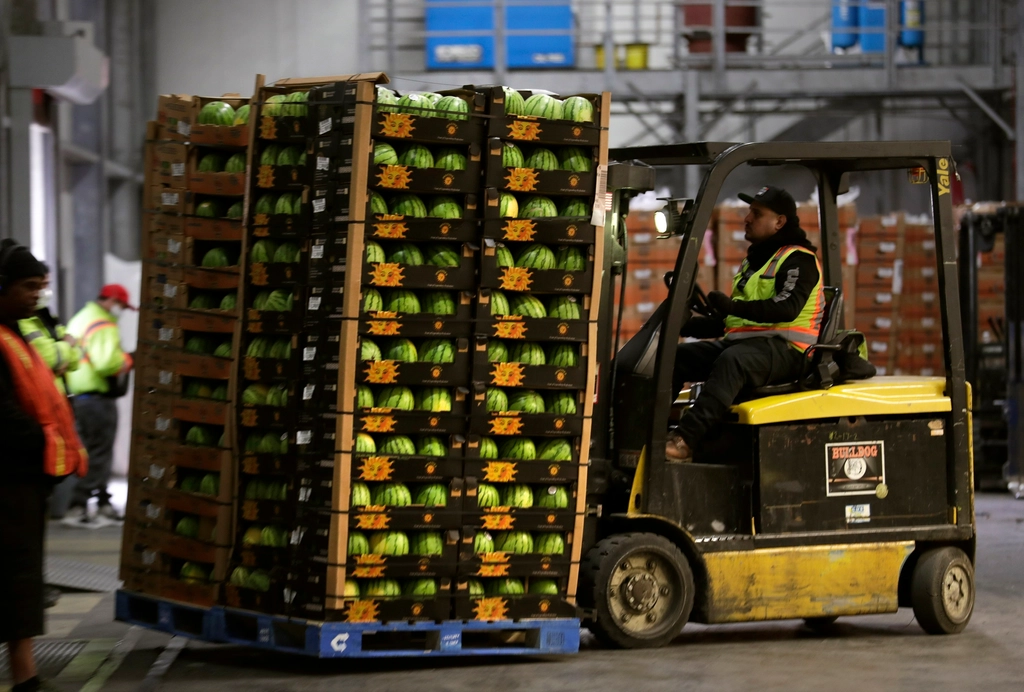
Oman Customs has rolled out one of the Gulf’s toughest new cargo-handling rules: no compliant pallet, no entry. Land border shipments are already being held to the standard, and sea and air cargo is next. Here’s exactly what’s required, what’s exempt, and what happens if your shipment doesn’t comply.
Why This Rule Matters Right Now
The Directorate General of Customs at the Royal Oman Police (ROP) has confirmed, in its own official announcement, a mandatory palletization requirement for cargo handling under Article 44 of the Common Customs Law of the Gulf Cooperation Council (GCC) States. This is not an Oman-only invention — it’s the same GCC-wide provision Kuwait Customs used for its own palletization mandate in August 2024 — but it lands on forwarders and importers moving cargo into Oman with real, near-term consequences.
The Phased Rollout: Land First, Then Sea and Air
The requirement is being implemented in two stages:
- Phase 1 — Land borders: effective 15 July 2026 (already in force). Any cargo crossing into Oman by road must already be palletized. CMA CGM’s own customer advisory on the rule also lists in-transit cargo moving through Oman by land for onward export as falling under this same Phase 1 requirement, though the official ROP announcement itself doesn’t spell this out explicitly — worth confirming with your Omani agent if you route transit cargo through the Sultanate.
- Phase 2 — Air and sea ports: effective 15 September 2026. This is the phase forwarders handling ocean and air freight need to prepare for now, not in late August.
The stated goal, per Oman Customs, is faster cargo handling, quicker clearance, and improved flow of commercial shipments through the Sultanate’s ports and border posts.
What the Rule Actually Requires
Goods that require loading and mechanical handling must be placed on pallets made of wood, plastic, or metal. The requirement targets cargo that is stacked and mechanically loaded/unloaded — not bulk or unit loads that are inherently unsuited to palletization.
What’s Exempt
Not everything needs a pallet. The official ROP announcement exempts goods that cannot reasonably be placed on pallets:
- Bulk cargo
- Heavy equipment
- Pipes
- Rolls/coils
- Stone and marble blocks
- Similar items
The last category is a catch-all left to customs discretion. Press coverage (Oman Observer, Muscat Daily) has separately cited liquids and fibres as falling under it, which is a reasonable reading but isn’t spelled out word-for-word in the official announcement — worth keeping in mind if you’re relying on an exemption argument at the border.
This list mirrors the logic in Kuwait’s comparable Article 44 rule, which excludes cargo over roughly 2 tonnes or 2 metres in length, plus vehicles, livestock, scrap metal, and prefabricated structures. Oman Customs has not published equivalent numerical thresholds of its own — treat Kuwait’s figures as a reference point for the type of cargo likely to qualify, not as a confirmed Omani cutoff.
Compliance Checklist
- Palletize now for land moves — this is a live requirement, not a future one.
- Build the 15 September deadline into shipping instructions today for sea and air freight bound for Oman.
- Use compliant materials only — wood, plastic, or metal.
- If using wood pallets, confirm separate ISPM 15 compliance (heat treatment/fumigation and IPPC stamp). ISPM 15 is a phytosanitary standard that applies only to wood packaging — plastic and metal pallets satisfy Oman’s palletization mandate on their own, with no ISPM 15 step required.
- Don’t overlook transit cargo. Goods moving through Oman by land for onward export — not only cargo destined for the Omani market — are also subject to the Phase 1 palletization requirement.
- Document your exemption basis in advance for cargo you believe qualifies (bulk cargo, heavy equipment, pipes, rolls/coils, stone/marble blocks).
- Brief origin warehouses and CFS operators handling LCL/groupage cargo bound for Oman — palletize at the point of stuffing, not at destination.
- Confirm local application with your Omani consignee or customs broker, since enforcement detail can vary port-to-port during early implementation.
- Keep DG cargo compliance separate and additional — palletization does not replace IMDG Code segregation, securing, marking, or labelling obligations.
Non-Compliance: What You Risk
- Return to origin. The official ROP announcement states plainly that non-compliant shipments “will be returned to their country of origin” — definitive language, not a discretionary “may.”
- No confirmed fine-and-release option. This differs from Kuwait’s parallel rule, which permits release against a fine (KD 80 first violation, KD 400 for repeat non-compliance). Nothing in current Omani reporting suggests an equivalent fine-based alternative.
- Real financial exposure. Return freight, demurrage/detention while the shipment is held, storage charges, and the commercial cost of a failed delivery to your Omani buyer.
- Consignees should be pre-warned that non-compliance is not a paperwork delay — it can mean the cargo does not enter the country on that movement at all.
Sources
Royal Oman Police, Directorate General of Customs, Official Announcement on Mandatory Palletization (primary source)
Oman Observer, “Oman Customs to require palletised imports from July 15”
Muscat Daily, “ROP announces mandatory use of pallets for imported goods,” 4 June 2026
Zawya, “Oman Customs to require palletised imports from July 15”
CMA CGM, “Mandatory Palletization Requirements for Oman,” Customer Advisory, 29 June 2026
Emirates Shipping Line, Kuwait Customs Article 44 palletization advisory (comparative reference)
Discover more from IMDG Code Compliance Centre
Subscribe to get the latest posts sent to your email.