


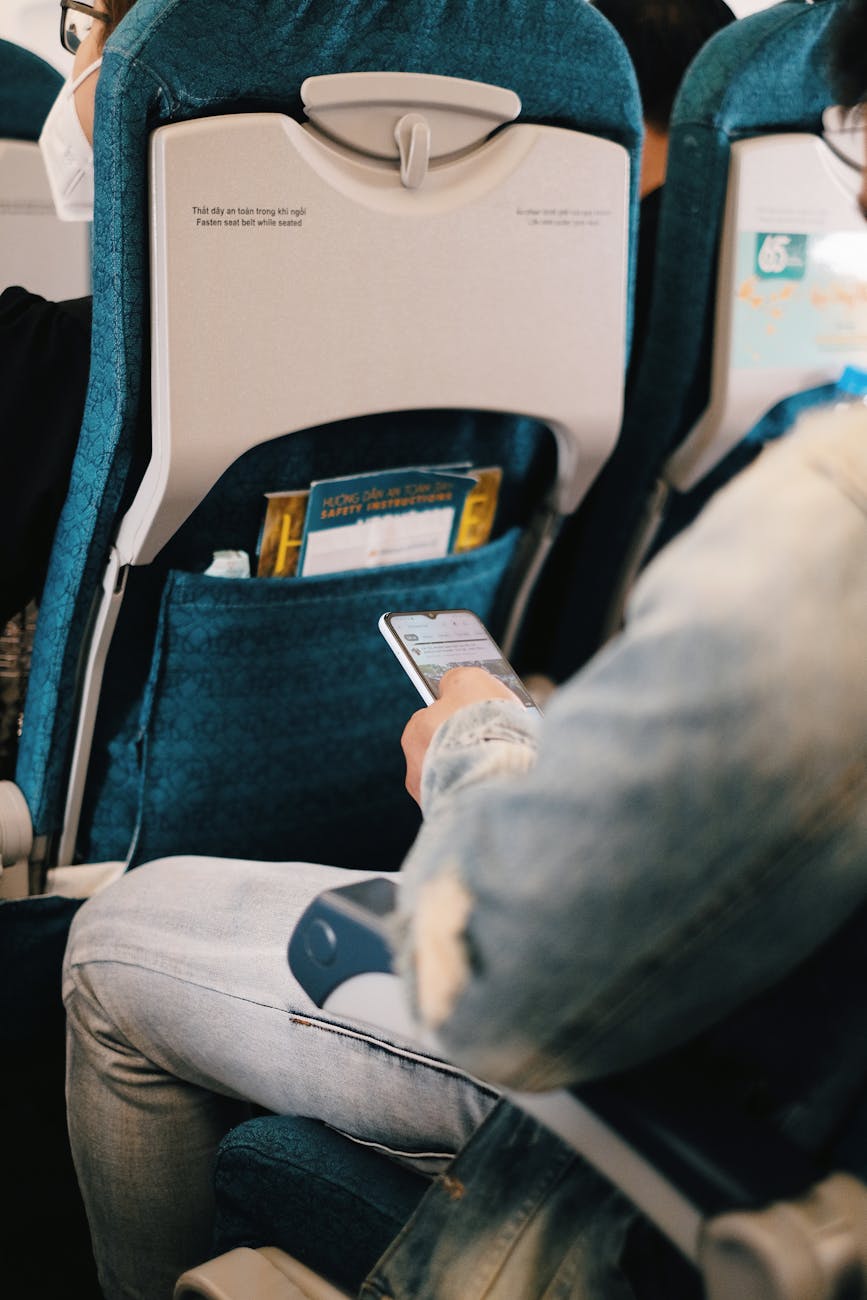
A power bank caught fire at Chandigarh airport on a flight recently. No serious injuries, no aircraft damage, however, the incident is a reminder that this ubiquitous travel accessory is a live dangerous goods issue, not a theoretical one.
How the IMDG Code 42-24 Treats Power Banks
Shipped as cargo by sea, power banks are classified under the IMDG Code as lithium ion batteries: UN 3480 (Lithium ion batteries) or UN 3481 (Lithium ion batteries packed with or contained in equipment), depending on configuration.
Special Provision 188 (SP 188) in IMDG Code Chapter 3.3 provides the primary relief for small lithium cells and batteries. For a power bank to qualify under SP 188, the lithium ion battery must not exceed 100 Wh. Those exceeding 100 Wh are subject to full Class 9 packing, marking, labelling and documentation requirements with no SP 188 relief.
The key risk that concerns regulators—thermal runaway triggered by low-quality cells, physical damage, or the resulting fire—is fundamentally the same whether the batteries are stowed in a ship’s cargo hold or carried in a passenger’s bag on a flight.
Low barriers to manufacturing, inadequate quality control, and widespread non-compliance with UN Manual of Tests and Criteria, Part III, subsection 38.3 (UN 38.3) testing are cited in both contexts.
What Changed on 27 March 2026 for Air travel
ICAO issued Addendum No. 1 to the 2025–2026 Technical Instructions (Doc 9284) with immediate applicability from 27 March 2026. IATA has issued a Guidance Document for Operators to assist with implementation. The 67th edition IATA DGR applies until 31 December 2026; these changes will be formally incorporated into the 68th edition from 1 January 2027.
The addendum makes three structural changes:
1. Power banks are now separated from spare batteries. Previously, the Technical Instructions treated power banks the same as spare batteries. The addendum creates a distinct category for power banks, defined as a universal external power source capable of powering multiple devices. Spare batteries, by contrast, are designed to be inserted into or affixed to a specific device. This distinction matters because power banks are far more susceptible to counterfeiting and mass production without proper quality controls.
2. Passengers (and crew for personal use) are limited to two power banks. This is a hard limit with no operator override for quantities above two. The limit applies to each person. It is now codified in Table 8-1 of the Technical Instructions, Part 8, Chapter 1.
3. Recharging of power banks in flight is prohibited. Power banks must not be recharged while onboard the aircraft. Additionally — framed as a recommendation rather than a requirement — passengers should not use a power bank to recharge another portable electronic device in flight. Both the prohibition and recommendation are new requirements under the addendum.
The 100–160 Wh Power Bank Are Now Forbidden for Passengers – The earlier Technical Instructions allowed passengers to carry power banks rated between 100 Wh and 160 Wh with operator approval. That provision has been removed. Under the addendum, any power bank exceeding 100 Wh is forbidden for passenger carriage. This is a significant tightening. The IATA guidance is explicit: given the lack of confidence in regulatory oversight of power bank manufacturers, this 100–160 Wh window will not be carried into the 68th edition DGR.
The 100 Wh ceiling aligns the passenger provision with the operator crew provision — crew power banks used in the performance of operational duties are also capped at 100 Wh.
| Requirement | Status |
| Carry-on only | Existing — unchanged |
| Maximum 2 power banks per person | New — 27 March 2026 |
| No recharging in flight | New — 27 March 2026 |
| 100 Wh ceiling, no operator override above | New — 100–160 Wh now forbidden |
| UN 38.3 testing compliance | Existing — unchanged |
| Individual protection against short circuit | Existing — unchanged |
IATA Guidance Document for Operators – implementing the changes announced on 27 March 2026.
The Chandigarh airport incident is unlikely to be the last. The root cause — non-compliant cells with no credible UN 38.3 testing — remains widespread in the consumer market.
Regulatory tightening addresses the symptom; the manufacturing quality problem persists.
Anyone involved in the transport of lithium batteries by sea or air should read the IATA Operator Guidance document and the IMDG Code.
Both point to the same conclusion: buy quality, verify compliance, and do not assume that a product on a retail shelf has been tested to the required standard.
Discover more from IMDG Code Compliance Centre
Subscribe to get the latest posts sent to your email.