


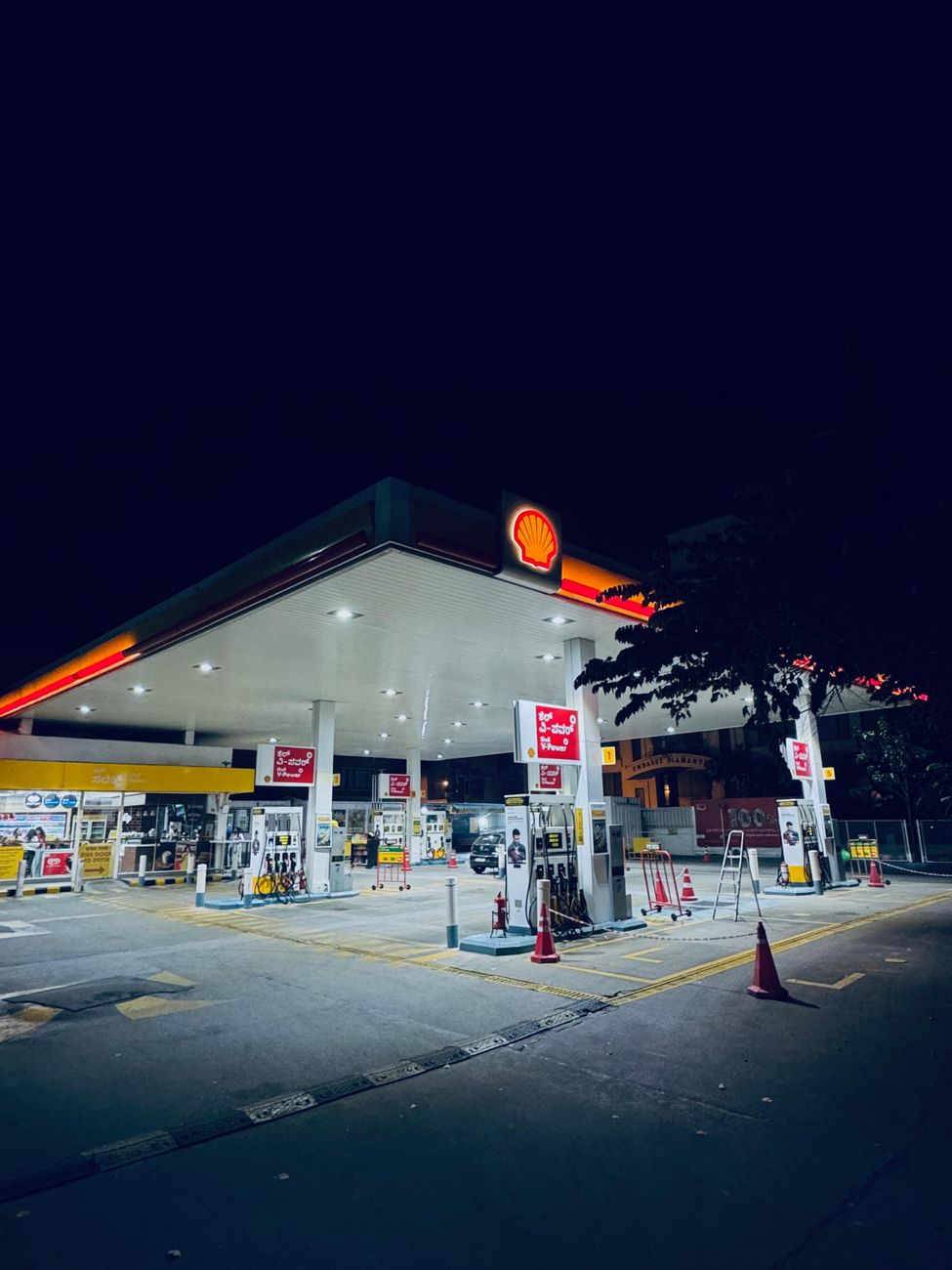
The Ethanol Blending Conundrum in India
Separating Social Media Myths from Dangerous Goods Reality
This article is strictly dedicated to analyzing the technical, engineering, and chemical safety aspects of ethanol-blended fuel transport, storage, vehicle compatibility, and emergency response parameters. It does not address or evaluate the commercial value, pricing mechanisms, or economic policies surrounding the national blending mandate.
Over the past year, social media has been abuzz with claims of ethanol-blended petrol damaging vehicles and reducing mileage in India. Viral videos and alarming posts claim that the nationwide rollout of E20 fuel (petrol blended with 20% ethanol) — now the standard grade at every pump in the country since April 2026 — is corroding engine internals, destroying fuel lines, and leaving drivers with significantly lower fuel efficiency.
Concurrently, a downstream logistical challenge is unfolding at terminals and distribution hubs. Many transport facilities and response teams are failing to realize that shifting from standard petrol to E20 changes more than vehicle dynamics — it fundamentally alters the regulatory classification of the substance under dangerous goods frameworks, moving the goalposts for safe storage and emergency response.
Let us separate the technical realities of ethanol from consumer panic, examine what vehicle and engine manufacturers are actually telling their customers, and analyze the regulatory, engineering, and firefighting transformations required when a substance transitions from standard gasoline to an alcohol-blended mixture.
The Consumer Crisis: What Is Happening at Indian Fuel Pumps?
India’s ethanol-blending programme, driven by macroeconomic and environmental goals, reached its 20% blending target ahead of schedule, and E20 fuel with a minimum Research Octane Number of 95 became the mandatory grade at petrol pumps nationwide from April 1, 2026. This rapid national shift has triggered widespread confusion among consumers, who are raising two primary complaints: a perceived drop in fuel economy and physical engine component degradation. To understand these claims, we must look at the physical properties of ethanol and at what manufacturers are actually saying.
The Mileage Penalty Is Real, but Math — Not Malice
Ethanol has around 33–34% less energy density than pure petrol, meaning it inherently delivers fewer kilometers per litre. Government sources have put the real-world efficiency loss at approximately 1–2% for four-wheelers that are designed for E10 and calibrated for E20, and around 3–6% for older or non-optimised vehicles, with independent studies and consumer surveys reporting figures at the higher end of that range for legacy vehicles.
Source: Ministry of Road Transport and Highways / Lok Sabha reply, December 2025
To manage this drop in energy density, fuel-injected vehicles rely on closed-loop electronic fuel injection: an oxygen (lambda) sensor in the exhaust continuously measures the air-fuel mixture actually burned, and the ECU adjusts injector pulse width in real time to hold the target ratio, regardless of small variations in fuel composition. This is a routine feedback-control function present in virtually all BS6 engines, not a dedicated “ethanol sensor.” True flex-fuel vehicles (FFVs), which can run anywhere from E20 to E85, do carry a dedicated fuel-composition sensor and a wider calibration map — but these remain a limited, still-emerging category in India rather than the mass-market fleet. For an ordinary E20-compliant car or two-wheeler, the mileage dip is a verified thermodynamic reality, managed by conventional closed-loop fuelling — not evidence of a fuel station scam or a sign of engine failure.
Source: SIAM technology demonstration on Flex Fuel Vehicles, December 2022; CarzSpa automotive technical analysis on E20 real-time fuel trim.
Component Degradation: Compliance Date Matters — But It Is Not a Single Bright Line
The claims of catastrophic engine damage require a careful, and more nuanced, look than the original social media narrative suggests.
Ethanol is a polar, hygroscopic solvent and is corrosive to soft metals such as aluminium, zinc, and brass, and to older formulations of rubber and plastic — particularly nitrile rubber, which ethanol swells and degrades.
The government’s compliance timeline has two distinct milestones, and conflating them is one of the most common errors in circulation:
- April 2023 — All new petrol vehicles were required to be E20 “material-compliant.” This means fuel-contact components (seals, hoses, gaskets, tank linings) were upgraded to ethanol-tolerant materials, but the engine calibration itself was not necessarily re-tuned for optimal E20 combustion.
- April 2025 — Manufacturers were expected to move to fully E20-tuned, engine-calibrated production, aligning ECU mapping and, in some cases, compression ratios to extract the octane benefit of ethanol rather than merely tolerating it.
Vehicles sold before April 1, 2023 are officially classed as E10 material-compliant only. According to Union Road Transport and Highways Minister Nitin Gadkari’s December 2025 statement to the Lok Sabha, government-commissioned testing by the Automotive Research Association of India (ARAI) ran older, pre-2023 vehicles for roughly 1 lakh cumulative kilometres on E20 and reported no vehicle engine failures, with no significant adverse impact observed on driveability, startability, or metal and plastic compatibility. The government has, on this basis, ruled out any mandatory retrofit or phase-out programme, stating that normal wear and tear can be managed through the routine servicing schedule, and it has separately stated it is not considering a compensation fund for E20-related component wear.
Source: Nitin Gadkari, Lok Sabha reply, December 2025.
This official position sits alongside a harder-edged reality reported independently: a widely cited industry survey found the proportion of pre-2022 petrol vehicle owners reporting abnormal deterioration or repair needs in fuel-system components — engine, fuel line, tank, and carburettor — rose sharply through 2025 as the E20 rollout became universal. A separately reported industry estimate suggests only around one in five new petrol vehicles sold in India over the past 15 years were originally engineered for E20. The gap between the official “no significant impact” position and rising owner-reported complaints on legacy vehicles is the central point of friction in the current public debate, and professionals should present both sides rather than either extreme.
Source: Autocar India / 91Wheels OEM warranty roundup, November 2025; Spinny model-wise compatibility summaries; The Week, September 2025; BikeDekho, August 2025; CarQuest India; Carhp India.
What Actually Fails, Mechanically, in a Non-Compliant Fuel System
For professionals advising fleet operators or writing customer-facing guidance, the specific, verifiable failure modes reported are:
- Carburettor float-bowl seals and O-rings — legacy nitrile rubber swells and softens on contact with ethanol, causing fuel to seep past the float valve and produce a rich, fuel-dripping condition or flooding.
- Pilot-jet and injector gum deposits — as ethanol in a stagnant or partially evaporated fuel oxidises, it leaves sticky residues that block the small-diameter passages controlling idle and low-speed fuelling, producing hard starting and rough idle.
- Fuel-line swelling and rupture risk — early BS4 fuel-injected two-wheelers still used standard (non-fluoroelastomer) rubber lines between tank and injector rail; because FI systems run at materially higher pressure than a carburettor float bowl, an ethanol-softened line is more prone to bursting than to merely seeping.
- Corrosion of ferrous fuel-system components — through the hygroscopic mechanism discussed below, moisture drawn into the system can corrode steel tanks, fuel-pump internals, and un-plated fasteners over time.
Manufacturer-recommended mitigation for owners of non-compliant vehicles is consistent across brands: periodic fuel-system cleaner/stabiliser dosing, more frequent fuel-filter replacement, avoiding prolonged fuel storage (idle vehicles for months), and inspection of rubber components at routine service intervals — not a blanket recommendation against using E20, since alternative ethanol-free grades are no longer widely available at Indian pumps.
The Regulatory Divide: Decoding UN 1203 vs. UN 3475
From a dangerous goods and chemical logistics perspective, changing the ethanol concentration alters how the substance must be declared, placarded, and managed during transport and storage.
Under the UN Model Regulations and the IMDG Code, two distinct UN numbers govern these fuels based on a mathematical threshold of ethanol volume:
| UN 1203 | UN 3475 |
|---|---|
|
PSN: GASOLINE or MOTOR SPIRIT or PETROL Ethanol content: 10% or less by volume (standard petrol, E5, E10) Class & Packing Group: Class 3, Packing Group II* Flashpoint: Typically around −40 to −45°C EmS (Fire / Spill): F-E, S-E |
PSN: ETHANOL AND GASOLINE MIXTURE (or ETHANOL AND MOTOR SPIRIT MIXTURE / ETHANOL AND PETROL MIXTURE) Ethanol content: More than 10%, up to 90% by volume (E15, E20, E85) Class & Packing Group: Class 3, Packing Group II Flashpoint: Dominated by residual gasoline fraction; remains in the same low-flashpoint, highly volatile range as UN 1203 across the E15–E85 span EmS (Fire / Spill): F-E, S-E |
For decades, India primarily moved UN 1203. With the nationwide rollout of E20, the product flowing through bulk supply chains, tank trucks, and regional storage networks has crossed the threshold into UN 3475.
Treating UN 3475 exactly like UN 1203 is a critical compliance and operational error. While both are Class 3 flammable liquids with broadly similar flashpoint ranges, their chemical behaviour in the presence of water and fire differs sharply — and that is where storage and firefighting practice must change.
The Storage Challenge: Managing the Hygroscopic Nature of Ethanol
The single most troublesome property of ethanol in a commercial storage environment is that it is hygroscopic — it has an affinity for water and, when blended with gasoline, allows the resulting mixture to draw in and hold moisture from the ambient air far more readily than pure gasoline does.
In standard petrol (UN 1203), water contamination is relatively easy to manage. Water and pure hydrocarbons do not mix; water simply settles to the bottom of the storage tank, where it can be periodically drained via a sump.
With an ethanol-gasoline mixture (UN 3475), the chemistry changes. Ethanol acts as a co-solvent, binding with both water and gasoline. If the moisture level exceeds the blend’s saturation point, a phenomenon called phase separation occurs — the ethanol abandons the gasoline matrix, binds with the water, and drops out of suspension.
It is important to get the direction of this risk right: water tolerance increases, not decreases, with higher ethanol content. Widely cited industry data for E10 puts its water-saturation threshold at around 0.5% water by volume at 15.5°C (dropping further at lower temperatures), while E85-type blends can tolerate roughly 4% water before separating — an order of magnitude more, because there is simply more ethanol available to hold water in solution. E20, sitting between these, tolerates more water than E10 but less than the very high-ethanol blends. The operative point for terminal operators is not a single fixed percentage, but that any water-ingress budget assumed under UN 1203 housekeeping practice is inadequate once the product is UN 3475, and that temperature swings during storage (which lower tolerance) are the more common trigger for field separation events than a slow, steady rise in ambient humidity.
Source: Renewable Fuels Association Fuel Ethanol Industry Guidelines, cited via PetroClear and Enertech Labs technical bulletins; NREL, “Water Uptake and Weathering of Ethanol-Gasoline Blends in Humid Environments,” 2016.
During phase separation, the resulting water-and-ethanol-rich layer at the bottom of the tank is highly corrosive, and it leaves a depleted, lower-octane gasoline layer on top. If this separated mixture is pumped into a vehicle, it can cause immediate stalling and component damage.
To safely store UN 3475 and control phase-separation risk, storage terminals and retail outlets should implement:
- Desiccant Air Breathers — replacing standard open atmospheric vents with desiccant (silica gel) breather systems that strip incoming air of moisture during thermal breathing cycles.
- Nitrogen Blanketing — for large bulk storage assets, a positive-pressure inert nitrogen blanket over the liquid surface displaces oxygen and ambient moisture-bearing air.
- Internal Tank Linings — bare carbon steel tanks that safely held UN 1203 can suffer accelerated pitting corrosion if a phase-separated water-ethanol layer develops; tanks dedicated to UN 3475 should be lined with alcohol-compatible coatings such as novolac epoxies.
- Floating Roof Seal Upgrades — in internal floating roof (IFR) tanks, standard polyurethane or rubber rim seals swell, distort, and fail on prolonged ethanol contact; upgrade to fluoropolymer (Viton-type) or stainless-steel mechanical shoe seals.
Firefighting Realities: Why Standard Foam Will Fail
The most critical safety distinction between UN 1203 and UN 3475 lies in emergency response and fire suppression.
When standard petrol (UN 1203) catches fire, responders deploy traditional Class B Aqueous Film-Forming Foam (AFFF). Because hydrocarbons repel water, the foam blanket sits intact on top of the burning liquid.
If standard AFFF is applied to a UN 3475 (E20) fire, the ethanol component — acting as a polar solvent — aggressively extracts water from the foam structure, destroying the bubble matrix. The foam blanket dissolves into the fuel as fast as it is applied, failing to suppress vapours or extinguish the flames. This is consistent with why NFPA guidance has long placed high-ethanol fuels such as E85 in the same flammability class as gasoline for handling purposes, while still requiring alcohol-resistant suppression media because of their solvent behaviour toward standard foam, not because of a materially different flashpoint.
Source: NFPA 30 / 30A guidance as summarised in state fuel-ethanol retailer guidelines.
The mandatory solution is Alcohol-Resistant Aqueous Film-Forming Foam (AR-AFFF) or Alcohol-Resistant Synthetic Fluorine-Free Foam (AR-SFFF). These contain water-soluble polymers that, on contact with the alcohol, precipitate a tough polymeric membrane across the fuel surface, shielding the rest of the foam blanket from the ethanol’s solvent action and allowing the foam to accumulate, suppress vapours, and extinguish the fire.
Summary for Industry Professionals
The transition to an E20 economy in India requires more than retrofitting car manufacturing lines; it demands a corresponding upgrade in downstream safety and compliance literacy.
- For the consumer: If your vehicle was manufactured after April 2023, it is at minimum material-compliant with E20; fully E20-tuned production followed from April 2025. Expect a modest mileage reduction from pure thermodynamics — not the extreme figures circulating on social media — but if you own a carburetted or early fuel-injected vehicle predating the BS4/BS6 transition, follow your manufacturer’s advisory on fuel-system inspection and additive use, and do not let fuel sit idle for months.
- For the logistics and safety professional: Be clear that E20 fuel is legally UN 3475, not UN 1203. It requires proactive moisture control calibrated to the correct ethanol-content water-tolerance curve (not the E10 figure), ethanol-compatible internal linings and seals, and mandatory Alcohol-Resistant (AR) foam concentrate in fire suppression systems.
- For the fleet operator or workshop: The government’s own testing and the major OEMs broadly agree that E20 in a compliant, well-maintained vehicle does not cause structural failure — but independently reported complaint data on pre-2022 vehicles is real and rising, and the professionally honest position is to acknowledge both, not to dismiss either.
In the world of dangerous goods, a change in chemistry must always be met with a corresponding change in operational discipline.
Discover more from IMDG Code Compliance Centre
Subscribe to get the latest posts sent to your email.